Data Centers by State: Virginia Holds Half of 667 Tracked Sites
We mapped every data-center site in our physical-infrastructure dataset by state. One state holds 337 of 667 sites. Seven more states share most of the rest, and the map explains where the AI buildout is actually being poured.
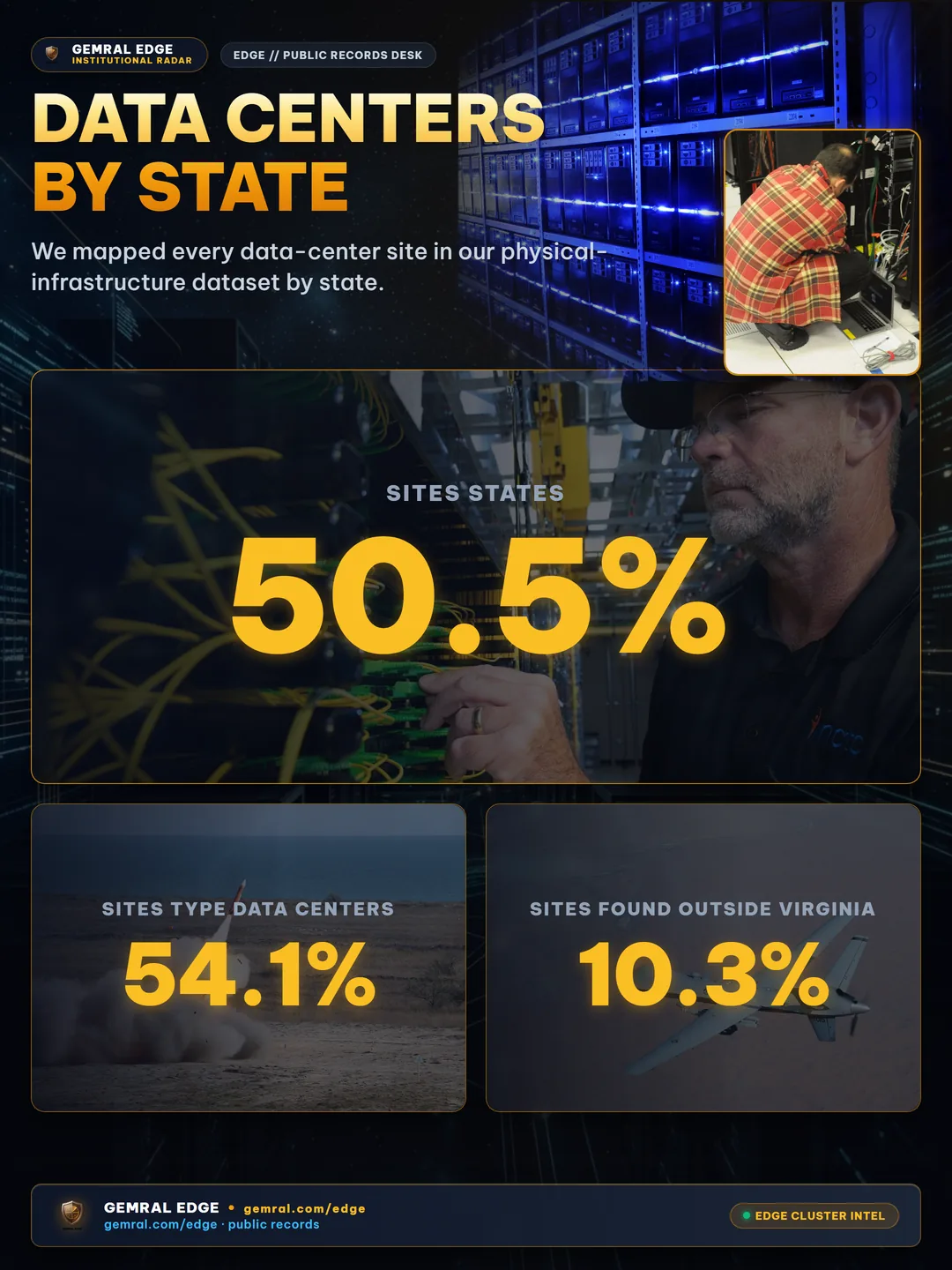
Type data centers by state into a search box and most results hand you a ranked list with a single number next to each name. That is a start, but it hides the thing that matters most about the map: how lopsided it is. In our physical-infrastructure dataset, 667 data-center sites are tracked across 40 states, and one state alone holds 337 of them. That is 50.5% of every site we follow, in a single state, before any other state is counted.
This article walks through the map the way a researcher would. We start with the full count, then the top eight states, then the grid distance of each site, one real record in detail, and finally how many sites we can tie to a company with a stock ticker. Every figure below was measured from the live dataset on November 12, 2026, and every figure has a limit that we state plainly.
How many data centers are there in each state?
The dataset holds 667 data-center sites and the count is not spread evenly. Forty states have at least one tracked site, which sounds broad until you see the distribution. Virginia has 337. Illinois is second with 34. Georgia follows with 29, then Ohio with 23, Colorado with 22, Nebraska with 21, Iowa with 18 and Pennsylvania with 17.
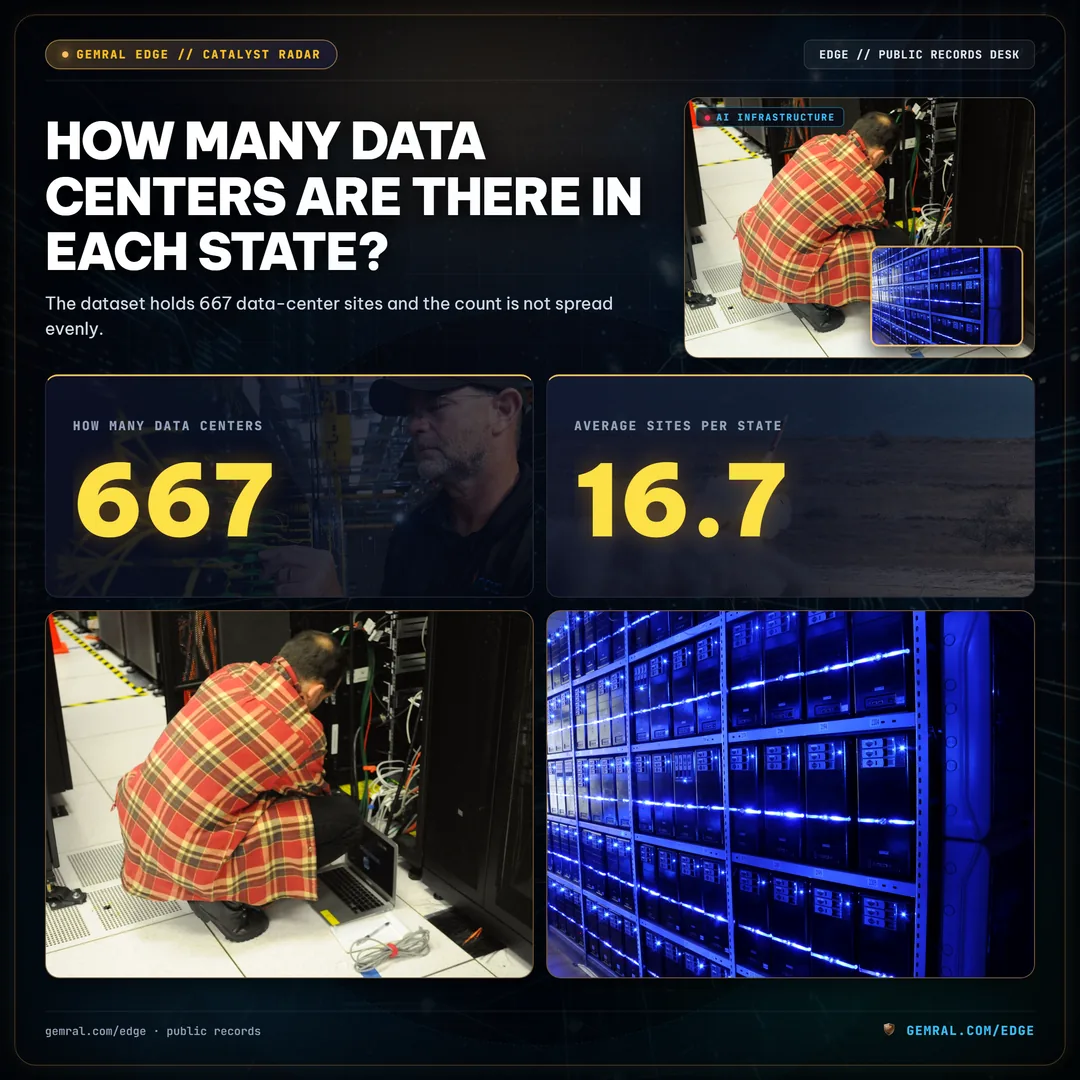
Put differently, the first state is almost ten times the size of the second: a ratio of 9.9 to 1. If the map were evenly split across 40 states, each state would hold 16.7 sites on average. Only eight states reach that level at all, and only one is far above it. A ranked list that prints "Virginia, then everyone else" in the same font size as every other row is technically correct and practically misleading.
Why does one state hold half the sites?
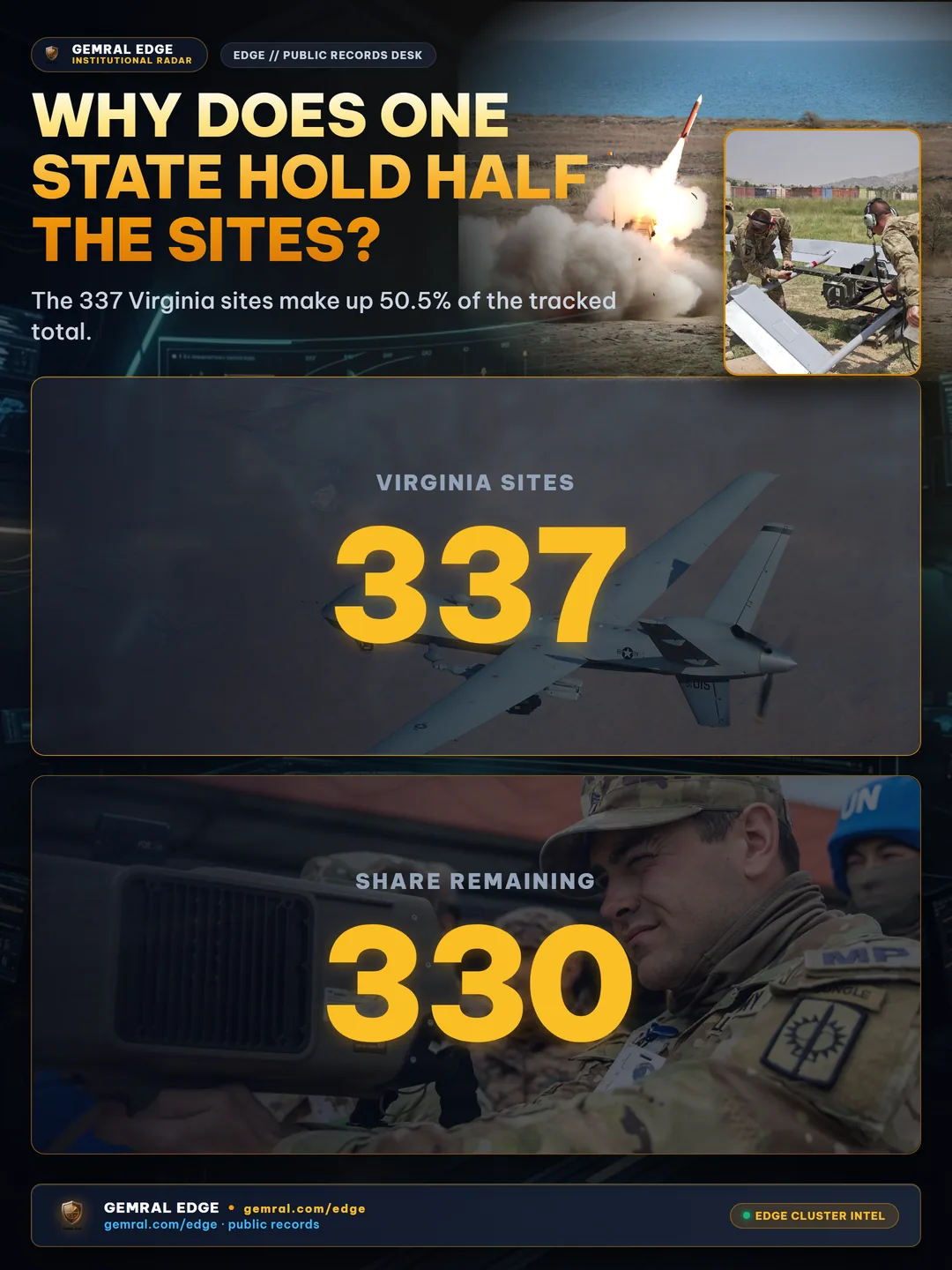
The 337 Virginia sites make up 50.5% of the tracked total. The other 39 states with sites share the remaining 330. This kind of clustering is common in infrastructure because data centers want the same things in the same places: dense fiber routes, existing power capacity, and neighbors that already host the customers. Once a few operators build in a corridor, others follow because the connections are already there.
For anyone reading the buildout as an investment theme, the concentration changes the question. A single state's permitting pace, grid interconnection queue or local rules can move a large share of the national picture. It also means that a count of "states with data centers" overstates how widely the buildout is spread. Forty states look like breadth, but the weight sits in one.
There is also a timing lesson in the clustering. A corridor that already holds most of the sites tends to be the first to run into limits, such as long waits for new grid connections, tighter local approvals and rising land costs. When those limits bite, new projects look for the next-best place, which is why the smaller states on the list deserve more attention than their counts suggest. A researcher who only watches the top of the ranking sees where the buildout has been. A researcher who watches the edges sees where it is going.
The next seven states, ranked
Outside Virginia, the top of the list is much flatter. Illinois leads with 34 sites, which is 10.3% of the 330 sites found outside Virginia. Georgia has 29, Ohio 23, Colorado 22, Nebraska 21, Iowa 18 and Pennsylvania 17. The spread from second place to eighth place is only 17 sites, compared with a gap of 303 between first and second.

Together the top eight states account for 501 of the 667 sites, or 75.1%. The remaining 32 states with sites share just 166 between them, an average of about five per state. Those smaller markets matter for a different reason: they are where new builds tend to appear first, since land and power are easier to secure than in a crowded corridor. In a dataset that is updated as records are published, the long tail is the part to watch for change.
How close is each site to the high-voltage grid?
A data center is only as useful as the power it can reach, so each site in the dataset is matched to its nearest high-voltage substation. Sites within 5 kilometers of a substation: 571 of 667, or 85.6%. Median distance to the nearest substation: 0.88 kilometers. In plain terms, the typical tracked site is less than a kilometer from a high-voltage substation.
That figure explains the map better than any ranking. Sites cluster where the grid already is. A new campus in a state with few sites is usually a campus that found a substation first. For researchers, distance to the grid is a better signal of where the next site can plausibly appear than the current state ranking, because the ranking only tells you where builders have already been.
One record up close: an Ohio campus
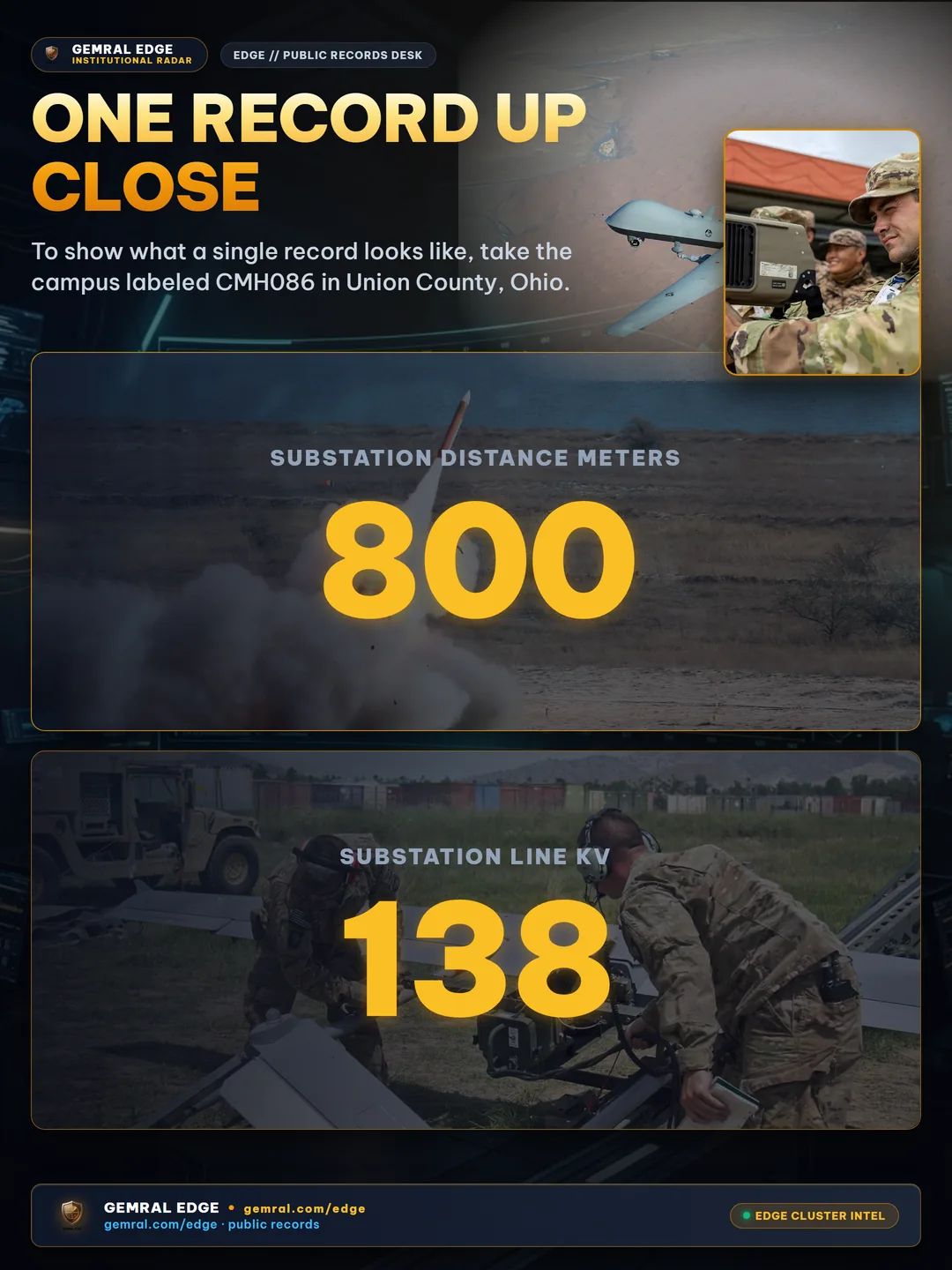
To show what a single record looks like, take the campus labeled CMH086 in Union County, Ohio. The record was published on October 17, 2026 and is tied to the ticker AMZN as of that publication date. Distance to the nearest high-voltage substation: 800 meters. Line voltage at that substation: 138 kV. That is one row in the dataset, and it carries the three things a researcher usually has to assemble by hand: where the site is, who stands behind it, and what the grid looks like next to it.
The detail that matters is the date. The company link is stamped with the ticker that was valid on the day the record became public, not the one that is current today. If a company later renames, merges or delists, the history keeps the label that was true at the time. That is what lets you study a buildout without looking ahead.
How many sites are tied to a listed company?
Of the 667 sites, 361 are tied to a company with a stock ticker, which is 54.1%. The rest belong to private operators, to owners that are not listed in the United States, or to sites where no public document establishes the link yet. We only attach a ticker when a public document supports it, so the unlinked share is an honest gap rather than a failure to look.
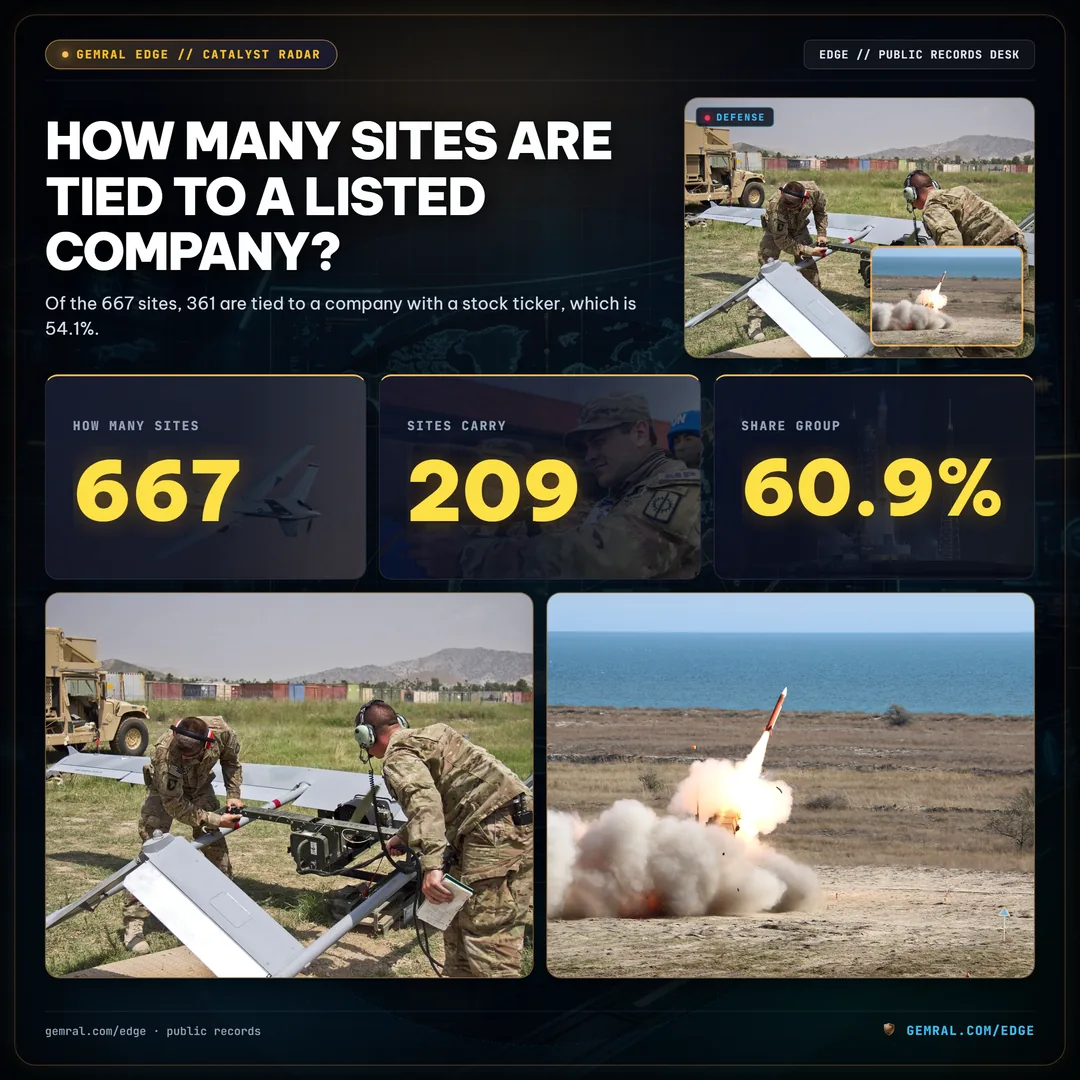
Virginia again dominates here: 209 of its 337 sites carry a ticker, which is 62.0%. Illinois has 14 linked sites out of 34, Georgia 11 out of 29, Ohio 14 out of 23 and Colorado 13 out of 22. Ohio has the highest linked share of the group at 60.9%, a reminder that two states with similar site counts can look very different once you ask who owns what.
What this count is not
The 667 figure is the number of data-center sites in our dataset, not a census of every data center in the United States. Many facilities are small, private or never appear in public records, and published counts of "all US data centers" vary widely depending on what a source chooses to include. Use ours as a consistent, dated record of the sites inside this dataset, and compare states within it rather than against another list.
Two other cautions apply. Site counts say nothing about size, so a state with fewer sites can host more capacity than one with many. And a nearby substation is a fact about geography, not a promise of delivered power. We do not convert any permit or capacity figure into computing load, and you should not either without your own assumptions.
A practical way to use this map is to ask three questions of any state before drawing a conclusion. First, how many sites does it hold, and is that count rising or flat between updates? Second, how many of those sites are tied to a listed company, since that is what links a location to something an investor can follow? Third, how close are the sites to existing high-voltage infrastructure, because a state with sites far from the grid is telling you something different from one where every site is next door to a substation. None of these questions needs a forecast. They only need dated records that were public when they were published, which is the standard we hold every row to.
Where to explore the data
If you want to follow how this map changes, start with our data-center power and permit hub, then read how backup generation is counted in data center backup generators and how utilities fit in data center energy stocks. For the investor view of the same buildout, see AI data center power stocks.
A sample of the structured records is available in the institutional data preview. Explore the data at gemral.com/edge.
Frequently asked questions
Which state has the most data centers?
Virginia has the most in our tracked dataset, with 337 of 667 data-center sites, or 50.5%. Illinois is second with 34.
How many states have tracked data-center sites?
40 states have at least one tracked data-center site as of November 12, 2026, but the top eight states hold 75.1% of all sites.
Is 667 the total number of data centers in the US?
No. It is the number of data-center sites in the Gemral Edge dataset. Many private or small facilities never appear in public records, and published national counts vary by definition.
How many tracked data-center sites are linked to a listed company?
361 of the 667 sites, or 54.1%, are tied to a company with a stock ticker, using the ticker valid on each record's publication date.