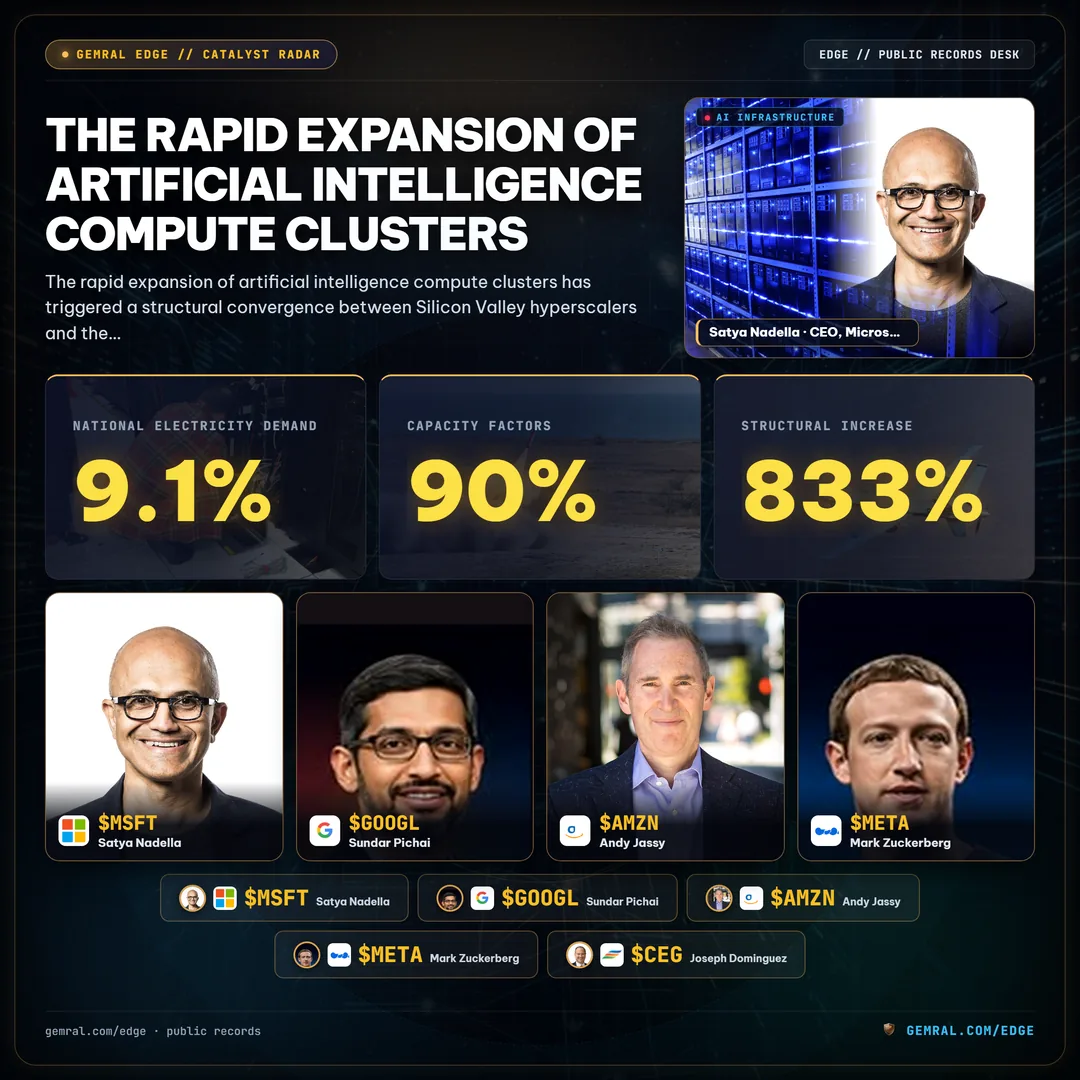
人工智能算力集群的迅猛扩张引发了硅谷超大规模云厂商与北美电网之间的结构性交汇。尽管市场早期的注意力集中在半导体设计商和服务器组装商上,但物理电力的可获得性已成为决定未来基础设施部署的关键瓶颈。大规模语言模型训练设施和实时推理集群需要持续、不间断的基础电力负荷,使得发电容量成为科技资本配置中受到最严格审查的变量之一。跟踪这一转型的机构投资者可通过我们的 power and utility infrastructure telemetry 平台查看实时监管文件、案卷和容量遥测数据。
根据美国电力科学研究院 (EPRI) 的预测,全美数据中心的电力消耗预计将从 2023 年的约 21 吉瓦增长至 2030 年的 54 吉瓦以上,占全美总电力需求的比例高达 9.1%。在局部区域性批发输电市场中,这种影响更为严峻。微软、Alphabet、亚马逊云科技和 Meta 等超大规模云厂商已承诺超过 $200,000,000,000 的年度基础设施资本支出,但要将资本转化为实际算力,必须确保获得并网点、持续基荷合同和物理电力输送设备。
随着输电排队时间延长以及地方电网面临备用容量压力,资本配置正在经历历史性的行业轮动。电力基础设施股票——涵盖独立发电商、受监管公用事业公司、燃气轮机制造商和电气设备供应商——正在被重新定价为当前算力超级周期的核心受益者。理解这种能源转型的机制需要深入分析公用事业并网队列、批发容量定价动态、核电购电协议 (PPA) 以及物理硬件供应链。
超大规模云厂商的电网困局:为什么 AI 数据中心电力股与纯算力芯片股走势分化
在生成式人工智能周期的初期阶段,企业资本直接涌入计算加速芯片、高带宽内存和专用网络芯片。然而,到 2024 年年中,次要运营约束开始主导集群的投产时间表:区域公用事业的并网排队队列。一个容纳 100,000 个顶级加速芯片的高级集群可消耗 100 兆瓦至 300 兆瓦的持续电力负荷——相当于一座美国中型城市的能耗规模。由于商业高密度 GPU 以空前的功率密度运行,超大规模数据中心运营商无法再仅仅依赖投机性的商业电网接入。
This dynamic precipitated a distinct equity performance divergence across equity markets. While merchant silicon manufacturers faced cyclical supply digestion and component delivery normalization, specialized power generation providers and grid equipment suppliers experienced structural backlog expansion. Public equity investors re-evaluated independent power producers (IPPs), regulated electric utilities, turbine manufacturers, and high-voltage apparatus providers as essential conduits for artificial intelligence scaling, expanding upon patterns identified in our analysis of data center energy stocks. The market recognized that compute cannot be monetized without electrons, prompting a flight of capital toward firms with existing operational generation permits, uncommitted megawatts, and proven interconnection priority.
此外,人工智能部署的地理格局已转向具备充裕基荷与输电能力的区域。过去聚集在北弗吉尼亚州和硅谷的集群正面临当地变电站容量配额限制和长达数年的并网延迟。为此,数据中心开发商正积极在 PJM Interconnection、德克萨斯州 ERCOT 和中西部 MISO 等区域谈判双边供电协议,推动非管制批发市场中的商业发电商获得数十亿美元的估值重估。
计算概念股与电力基础设施股走势分化还反映出截然不同的经济特征。半导体硬件由于芯片架构每 12 至 18 个月升级一次而面临快速淘汰周期,而发电资产则按照数十年的折旧计划运行。一台投产的天然气轮机或一座运行中的核电站能够产生持续 15 至 30 年的稳定、抗通胀合同现金流,为机构资本提供了长周期的明确能见度。
核电购电协议:表后基荷电源与小型模块化反应堆 (SMR) 投产时间线
为了兼顾持续的算力需求与雄心勃勃的企业净零碳排放目标,超大规模云厂商已果断转向商用核电。风力和光伏发电的间歇性需要公用事业级电池储能系统,而在多吉瓦级数据中心规模下,储能系统在经济和物流层面上仍不可行。商用核能是目前唯一能够提供 24/7 基荷容量、容量系数通常超过 90% 的在运零碳技术。
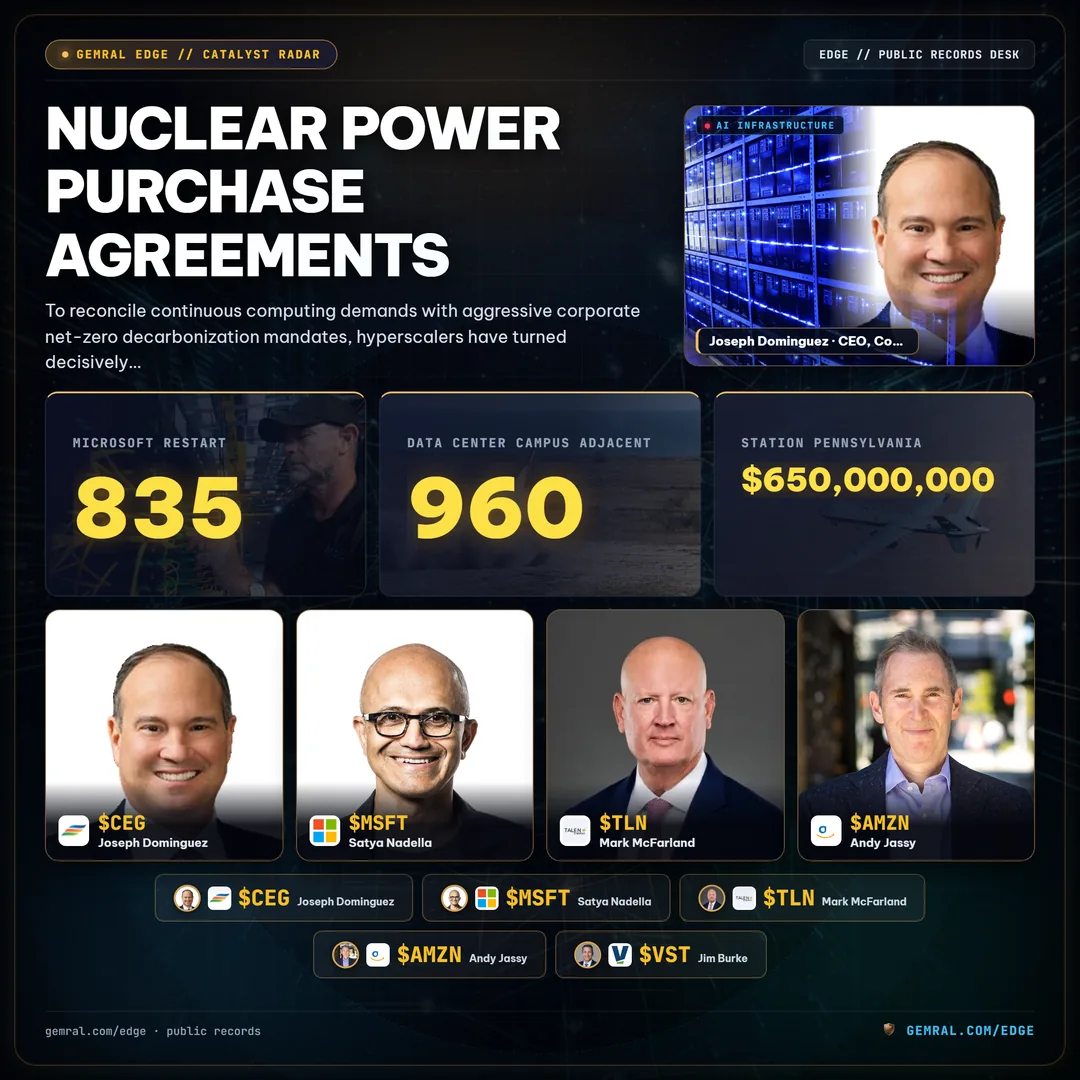
2024 年内签署的里程碑式双边协议突显了现有商用核电机组的战略价值。2024 年 9 月,Constellation Energy (CEG) 与微软达成历史性的 20 年购电协议,重启位于三里岛的 835 兆瓦 1 号机组(现更名为克兰清洁能源中心),计划于 2028 年重新并网。此前,Talen Energy (TLN) 与亚马逊云科技完成了标志性交易,亚马逊以 $650,000,000 收购了毗邻宾夕法尼亚州 960 兆瓦萨斯奎汉纳核电站的 Cumulus 数据中心园区,锁定了零碳基荷电力供应。
同样,Vistra Corp (VST) 在收购 Energy Harbor 后扩大了核电基荷布局,将其商用机组的核电容量整合至 6,400 兆瓦以上,总发电资产超过 41,000 兆瓦。这些商业交易突显了拥有运营中或休眠核反应堆许可证的独立发电商的巨大竞争优势。新建传统千兆瓦级核电站需要 15 至 20 年时间及数百亿美元的监管审批,而现有反应堆厂址已具备 NRC 运营牌照、排污许可和重型开关站电网接入基础设施。
除了现有商用核电机组,机构研究部门还在积极跟踪长期小型模块化反应堆 (SMR) 研发管线。主要科技巨头已投入早期研发资金以推进商用 SMR 部署,力求在未来的数据中心园区旁就地安放模块化反应堆。然而,由上市开发商主导的先进 SMR 架构商业化时间表仍指向 2030 年代初期,这主要是受到美国核管理委员会 (NRC) 详尽的设计认证要求以及高纯度低浓缩铀 (HALEU) 专用燃料供应链发展的制约。
燃气轮机与航改型调峰机组:2026 年吉瓦级负荷的快速并网桥梁
尽管核电提供了理想的长期零碳解决方案,但其商业重启与建设周期无法满足 2024 至 2027 年间超大规模数据中心的紧迫容量需求。因此,天然气发电已成为近期人工智能基础设施扩张不可或缺的过渡桥梁。双燃料联合循环电站和快速启动的航改型燃气轮机是唯一成熟且能在紧迫的数年交付窗口内完成许可、工程建设与通电的发电技术。
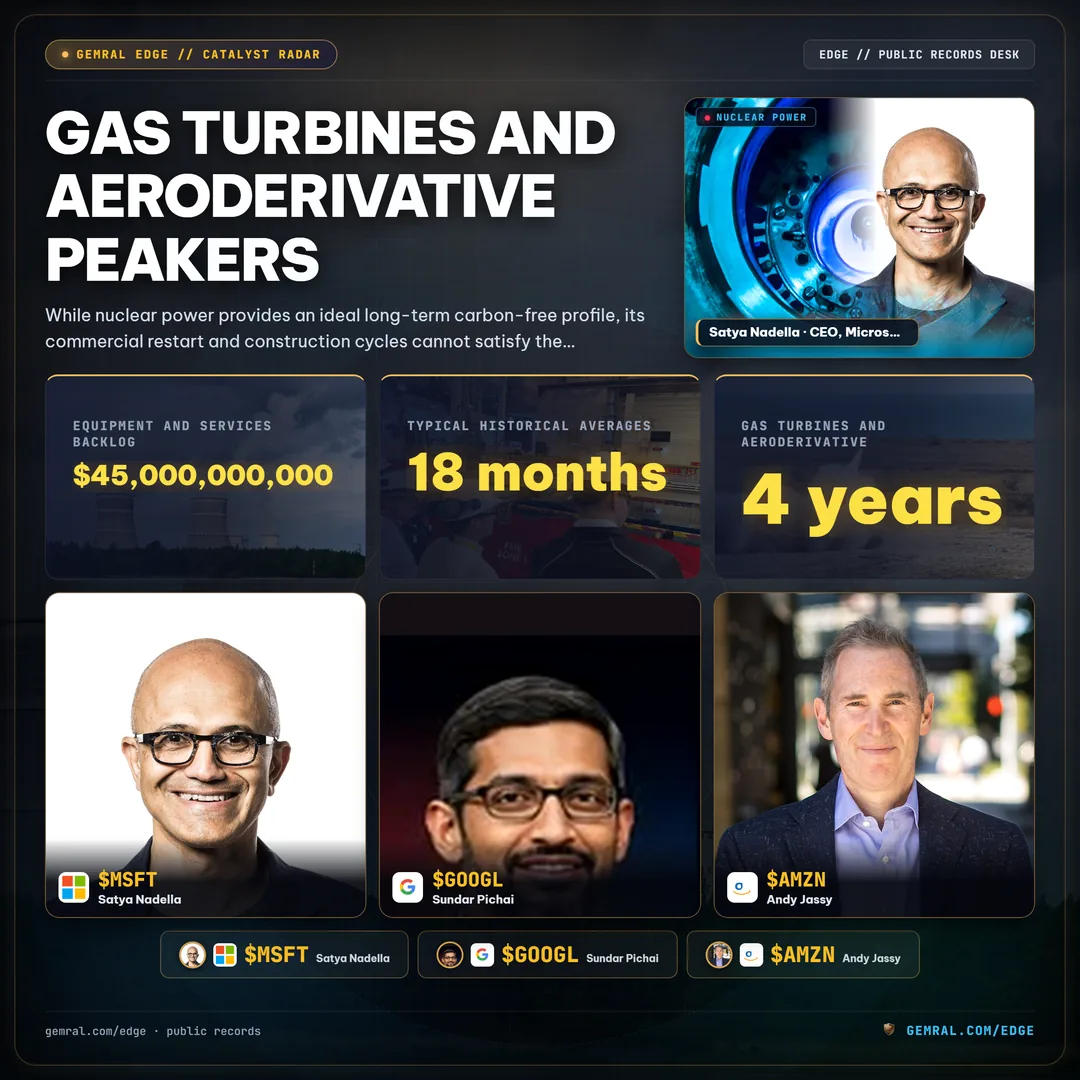
这一运营现实将动力设备工业制造商推向了资本开支部署的风口浪尖。GE Vernova (GEV) 于 2024 年 4 月完成独立上市,其燃气发电业务部门全球订单激增,积压的电气设备与服务订单金额突破 $45,000,000,000。重型燃气轮机的制造交付周期已从历史上通常的 18 个月延长至 3 到 4 年,实际上为寻求快速并网的开发商设立了设备配额门槛。
超大规模云厂商正越来越多地探索“孤岛”或微电网拓扑,在公用事业电表后方直接安装现场航改型天然气轮机,以绕过拥堵的输电排队。这种快速启动的调峰配置允许数据中心运营商在区域电网输电升级前数年就让算力集群通电上线,充分利用天然气管网资源并保持二级双燃料轻油备用。在德州 (ERCOT) 等负荷急剧增长造成电网备用吃紧的批发市场,现场天然气发电为 100 至 500 兆瓦级数据中心提供了一条经验证的供电路径,无需漫长等待多年的输电线路建设。
因此,管道运营商、中游集气系统和天然气轮机制造商已成为机构数据中心投资组合的核心组成部分。燃气轮机需求的持久性得到了重型电力资产附带的持续维护服务协议的进一步支撑。工业供应商通过涵盖现代轮机机组 25 年运营生命周期的长期服务协议 (LTSA),持续获取高利润率的经常性售后收入。
受监管公用事业与独立发电商:并网排队与 PJM 容量拍卖竞争格局
数据中心电力概念股的机构投资格局基本分化为受监管公用事业与商业独立发电商两大阵营。NextEra Energy (NEE)、南方电力 (SO) 和 Dominion Energy (D) 等受监管公用事业公司在传统州公用事业委员会的费率基准框架下运营。这些公司通过在输电线路、变电站和受监管电厂投资资本来赚取法定净资产收益率 (ROE),从而提供具有多年结构性增长路径的稳定防御型收益流。
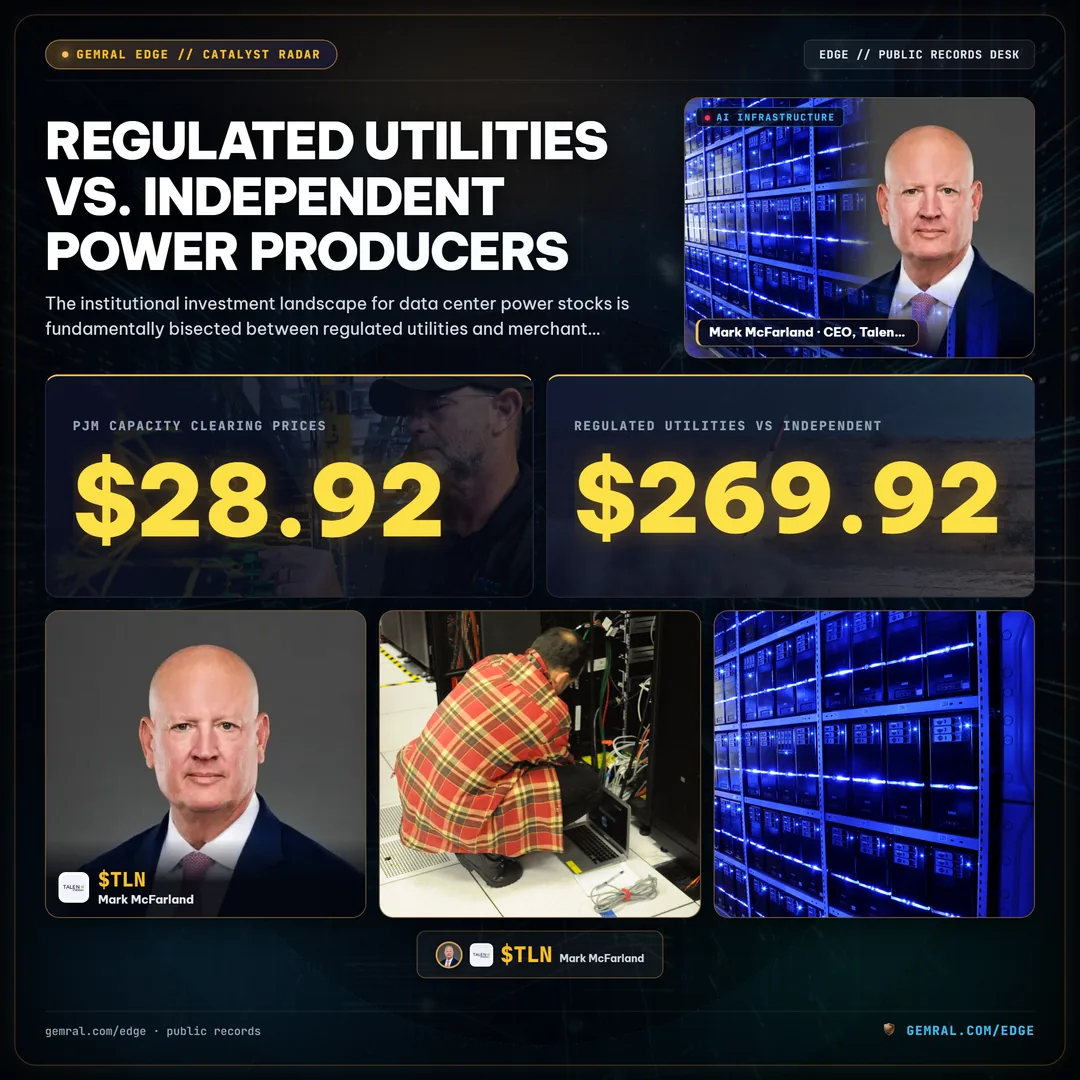
相比之下,独立发电商 (IPP) 在放开管制的竞争性电力批发市场中运营,通过竞争性拍卖机制和私下双边购电协议直接出售容量与电能。商业发电商的经营杠杆在 2024 年中进行的 PJM 互联 2025/2026 基础残差拍卖中展现得淋漓尽致。受数据中心预期需求攀升和火电退役加速引发的备用容量大幅缩减影响,PJM 容量出清价格从每兆瓦日 $28.92 飙升至 $269.92,结构性涨幅超过 833%。
然而,商业电力策略也伴随着监管政策风险。2024 年 11 月 1 日,美国联邦能源监管委员会 (FERC) 在第 ER24-2172 号案卷中以 2 比 1 的投票结果驳回了 PJM、PPL 电力公司与 Talen Energy 之间修订的并网服务协议 (ISA)。该裁决突显了对“表后”数据中心同址布局日益严苛的监管审查,质疑大型工业用电方是否会将电网输电可靠性成本转嫁给普通居民和商业公用事业纳税人。量化模型在评估双边商业电力合同的持久性时必须纳入这些监管先例。
与此同时,受监管公用事业公司正利用其特许专营服务区执行创纪录的资本开支计划。在弗吉尼亚州、佐治亚州和卡罗来纳州运营的公用事业控股公司正向州监管机构提交数吉瓦规模的综合资源规划 (IRP),以为新建输电走廊和天然气调峰机组融资。尽管与商业 IPP 相比,受监管公用事业的收入波动较小且股息收益丰厚,但其盈利增长受到法定费率上限的制约,而 IPP 则能在高峰需求定价事件中充分享受大宗商品与容量利差扩张红利。
热负荷、变压器与高压设备:物理供应链瓶颈剖析
除了发电机组轮机和核反应堆堆芯之外,高密度人工智能计算设施内的电能物理分配也带来了复杂的硬件制约。容纳高性能计算机架的现代数据中心架构需要多级降压变换,从公用事业输电电压(115 kV 至 500 kV)降至配电电平(13.8 kV 至 34.5 kV),最终转换为服务器级 415 V 或 48 V 直流架构。
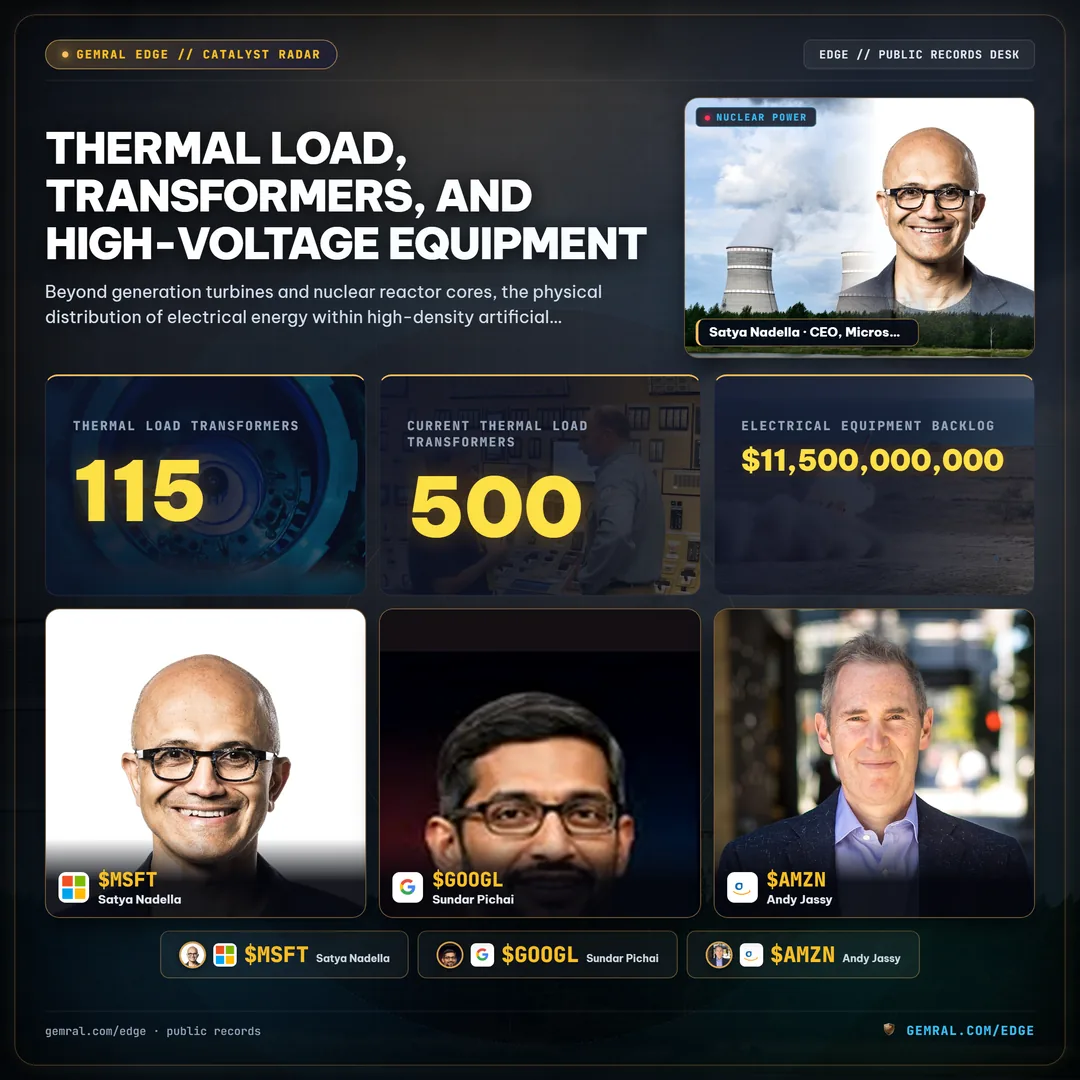
这种多级物理基础设施需求在高压电气设备制造商中引发了严重的供应链瓶颈。全球智能能源管理解决方案领军供应商伊顿公司 (ETN) 目前的电气设备积压订单约达 $11,500,000,000。由于电工级取向硅钢 (GOES)、熟练绕线技工以及高压测试产能的全球性短缺,目前大型电力变压器 (LPT) 的行业采购交付周期长达 120 至 160 周。
与此同时,高密度图形算力集群的散热需求催生了数据中心制冷架构的全面重塑。传统的风冷高架地板架构已无法有效消除每机架超过 40 kW 至 100 kW 的热密度。积压订单达 $7,000,000,000 的设备供应商维谛技术 (VRT) 正迅速占领液-气型及芯片直接液冷冷却分配单元 (CDU) 市场。液冷分流总管、闭环换热器以及不间断电源 (UPS) 电池的深度集成,使专业工业设备供应商成为此轮数据中心电力扩张的核心受益者。
热力学与电能输送的交汇构成了至关重要的结构性护城河。即使数据中心运营商取得了并网协议并锁定了供电来源,缺少开关柜、母线槽、配电单元 (PDU) 和精密冷水机组,项目依然无法投运。制造这些专用电气组件的公司享有强大的定价权和极高的新订单与出货比 (book-to-bill) 能见度,有效抵御了宏观经济波动对其营业利润率的冲击。
AI 数据中心电力概念股评估框架:订单积压质量、燃料获取与并网风险
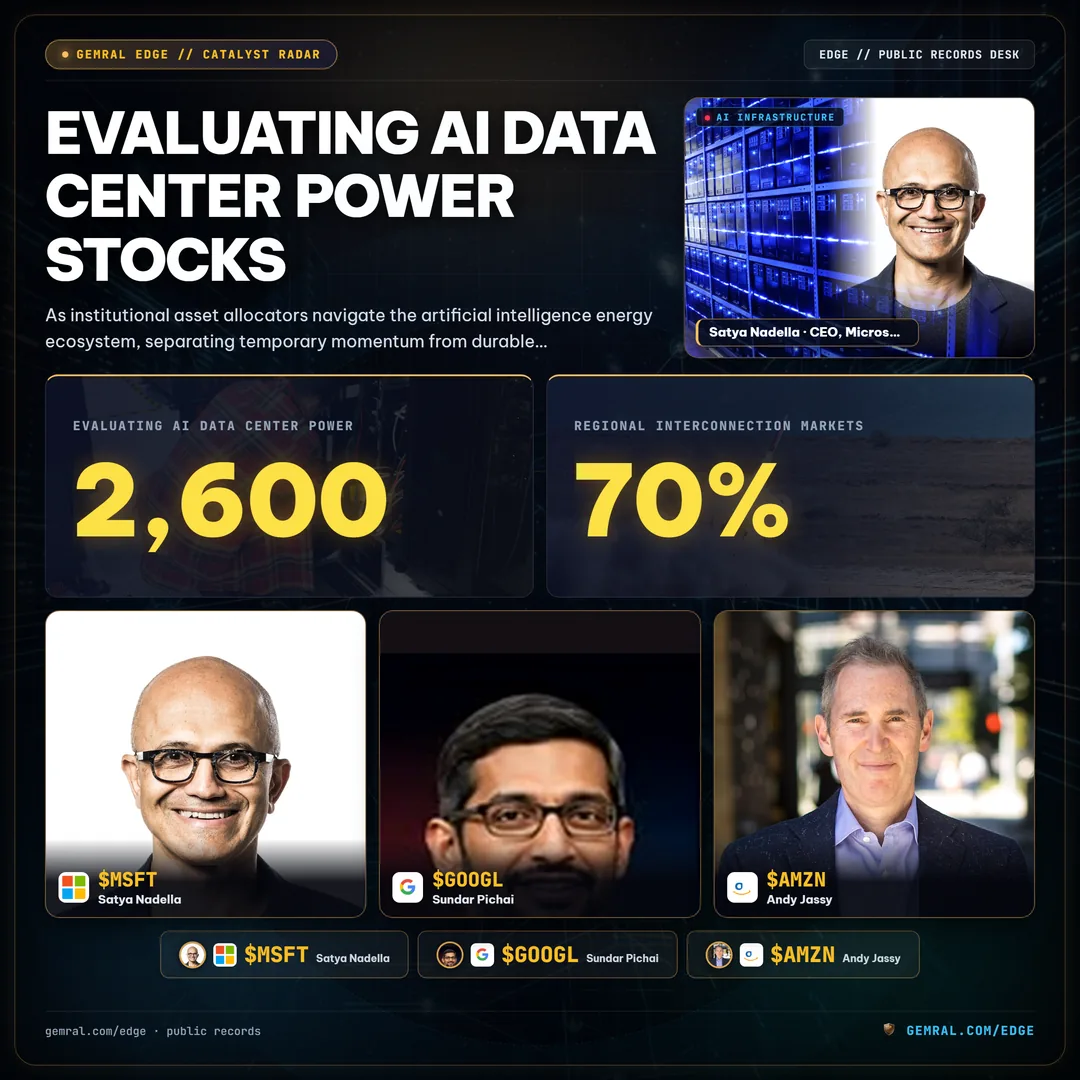
As institutional asset allocators navigate the artificial intelligence energy ecosystem, separating temporary momentum from durable cash-flow generation requires a disciplined analytical framework. With over 2,600 gigawatts of generation and storage capacity currently backlogged across regional United States interconnection queues, simply announcing an ambitious data center energy project does not guarantee commercial operation, a principle mirrored in our institutional tracking of AI companies with government contracts.
在对上市电力概念股进行基本面和量化尽职调查时,机构研究团队通常从四个核心运营维度展开评估:
- Interconnection Queue Maturity and Legal Rights: Verifying whether a developer holds executed, non-contingent Interconnection Service Agreements (ISAs) or merely preliminary speculative feasibility studies within regional RTO queues. Speculative queue entries experience attrition rates exceeding 70% in regional interconnection markets.
- Firm Fuel Access and Water Availability: Evaluating dual-fuel supply resilience, proximity to interstate natural gas pipelines, and local water rights for evaporative or closed-loop cooling towers. Facilities lacking firm pipeline transportation contracts face severe winter reliability curtailments.
- Regulatory Precedent and Cost-Allocation Risk: Monitoring FERC rulings and state public service commission proceedings to measure whether behind-the-meter co-location structures face regulatory curtailment or cost-shifting penalties. Regulatory cost-allocation challenges can delay co-located project commissioning by twelve to twenty-four months.
- Equipment Backlog Longevity: Auditing multi-year book-to-bill ratios and supply chain procurement visibility across critical equipment providers including GE Vernova, Eaton, and Vertiv. Tracking whether order backlogs reflect non-cancellable contractual commitments backed by customer cash deposits.
对于在 AI 基础设施领域配置资本的投资机构而言,追踪干净、附带时间戳的公开申报文件与监管案卷对于识别前瞻性供需失衡至关重要。若要查看我们对发电资产、公用事业监管程序和工业供电协议的深度覆盖,请浏览 live data preview、探索 datasets catalog,或查阅我们的 point-in-time public records telemetry。
公共记录遥测与监管披露数据。直接来源于官方 FERC 案卷、PJM 市场拍卖报告及 SEC 申报文件。不构成投资建议或对特定公司证券的背书。由 Gemral Edge Research 发布。
Frequently asked questions
Which public companies are the top AI data center power stocks?
The primary AI data center power stocks include independent nuclear power producers such as Constellation Energy (CEG), Vistra Corp (VST), and Talen Energy (TLN); turbine and power equipment manufacturers such as GE Vernova (GEV); electrical power distribution and liquid cooling providers such as Eaton (ETN) and Vertiv (VRT); alongside utility operators including NextEra Energy (NEE) and Southern Company (SO).
Why are Big Tech hyperscalers signing nuclear power purchase agreements?
Hyperscalers require 24/7 continuous baseload electricity with near-zero greenhouse gas emissions to satisfy corporate sustainability commitments while running 100,000-accelerator compute clusters. Intermittent solar and wind require multi-day battery storage systems that are currently uneconomic at multi-gigawatt scales, making existing nuclear plants and advanced small modular reactors (SMRs) the preferred power solution.
What regulatory risks do behind-the-meter data center contracts face?
Behind-the-meter (BTM) configurations, where a data center connects directly to a power generation facility without utilizing local transmission grids, face scrutiny from federal and state utility regulators. On November 1, 2024, the Federal Energy Regulatory Commission (FERC) rejected an amended interconnection agreement between Talen Energy and PJM, establishing that co-located data centers must not shift transmission upgrade costs or reliability burdens onto public utility ratepayers.
What is the primary equipment supply bottleneck for new power generation?
The most acute physical bottlenecks are high-voltage step-up transformers (with procurement lead times stretching to 120 to 160 weeks) and aeroderivative gas turbines (with backlogs extending between 36 and 48 months). Equipment producers such as GE Vernova and Eaton maintain multi-year backlogs that constrain the pace of physical grid expansion.