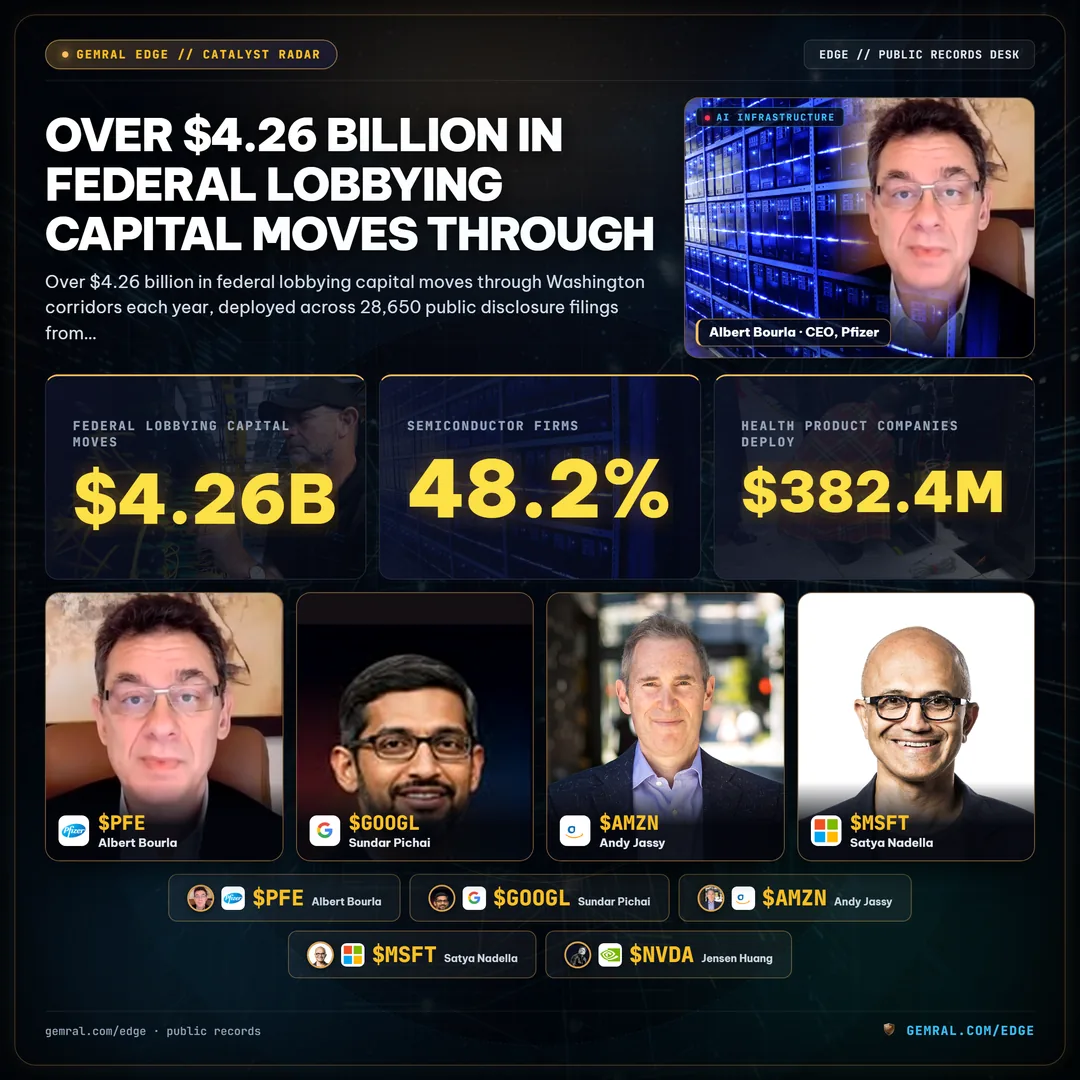
每年超过$4.26亿联邦游说资金穿梭于华盛顿走廊,分布在12,840家活跃注册企业客户提交的28,650份公开披露文件中。当财经媒体聚焦于头条季度财报时,自动化企业游说追踪器在法定披露临界点捕获企业游说重点的转移——比立法指令与预算拨款进入委员会点名表决提前数周。
公开情报遥测显示,企业游说支出并非随意的机构支出;它们是经过精心计算的资本配置,旨在巩固垄断护城河、修改监管约束并争取数十亿美元的联邦采购机会。通过持续监控参议院公共记录办公室 (SOPR) 申报与众议院秘书处披露,量化投资者得以实时追踪机构影响力的演进轨迹。
当与国会山监督结合时,这种情报变得尤为敏锐。正如通过国会股票追踪器跟踪议员股票投资组合,或通过政府合同追踪器分析主合同分配一样,企业游说监控精确勾勒了资本在联邦层面与立法权力交汇的节点。
企业游说追踪器如何解码参议院LDA公开申报
企业游说追踪器是一个基于算法的数据情报平台,旨在接收、标准化并监控根据1995年《游说披露法案》(LDA)和2007年《诚实领导与开放政府法案》(HLOGA)强制披露的公开记录。在12,840家活跃注册机构与13,420名注册游说者的庞大网络中,系统每季度审查超过28,650份申报,核算超过$4.26亿的年度游说资本总量。
根据联邦法律,各机构必须在严格的法定时限内向参议院公共记录办公室和众议院立法资源中心提交三类基础申报文件:
- LD-1表(注册声明):机构在聘请外部游说人员或内部雇员进行第二次游说接触后的45天内提交,确立客户身份与初始基准范围内的总体议题领域。
- LD-2表(季度活动报告):每90天提交一次(在季度结束后20个日历日内),详列发生的总费用、游说的具体法案编号、目标联邦机构以及指派的具体游说人员。
- LD-203表(政治捐款报告):每半年披露一次,详列向指定联邦官员设立的政治委员会和荣誉基金的竞选捐款。
传统分析师常将此类申报视为官僚合规文书。然而,量化系统将LD-2报告视为结构化操作信号。通过提取标准化议题代码——例如代表电信与科技的TEC、代表国防的DEF、代表版权与专利的CPT以及代表联邦税收的TAX——自动化追踪引擎能够量化哪些跨国企业正在显著增强其政策存在感。
法定LDA披露时间表与季度支出速度
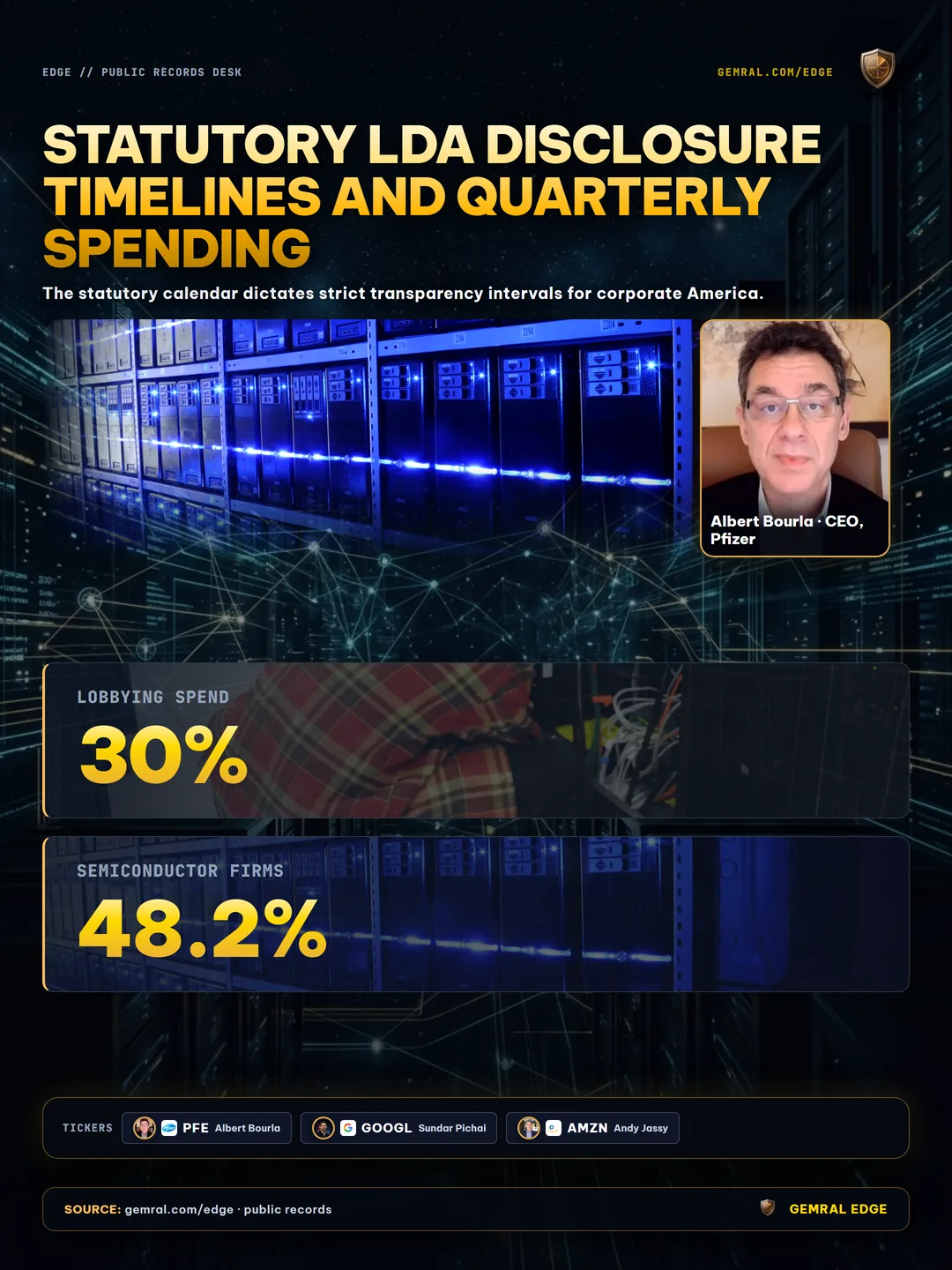
法定日历为美国企业界规定了严格的透明度周期。与偶发的SEC申报不同,企业游说披露遵循严格的季度节奏。各机构在每个季度结束后正好有20个日历日来计算并提交其LD-2报告。
季度申报截止日期统筹整个财政年度的透明度节奏:
| 季度 | 涵盖活动窗口 | 法定申报截止日期 | 市场情报意义 |
|---|---|---|---|
| Q1 | 1月1日 – 3月31日 | 4月20日 | 年度预算决议早期定位与年度授权法案起草 |
| Q2 | 4月1日 – 6月30日 | 7月20日 | 委员会审议调整与拨款法案修正案定位 |
| Q3 | 7月1日 – 9月30日 | 10月20日 | 财年末合同加速签署与持续决议案博弈 |
| Q4 | 10月1日 – 12月31日 | 1月20日 | 综合立法打包、会期末税收延期与NDAA最终定稿 |
当特定行业的多个市场主体同时将季度游说支出增加30%以上时,通常预示着高确定性的立法博弈。例如,在围绕先进计算与人工智能出口管制的关键立法辩论期间,半导体公司的游说支出同比激增48.2%。
行业资金分布:每年$4.26亿影响力资本集中于何处
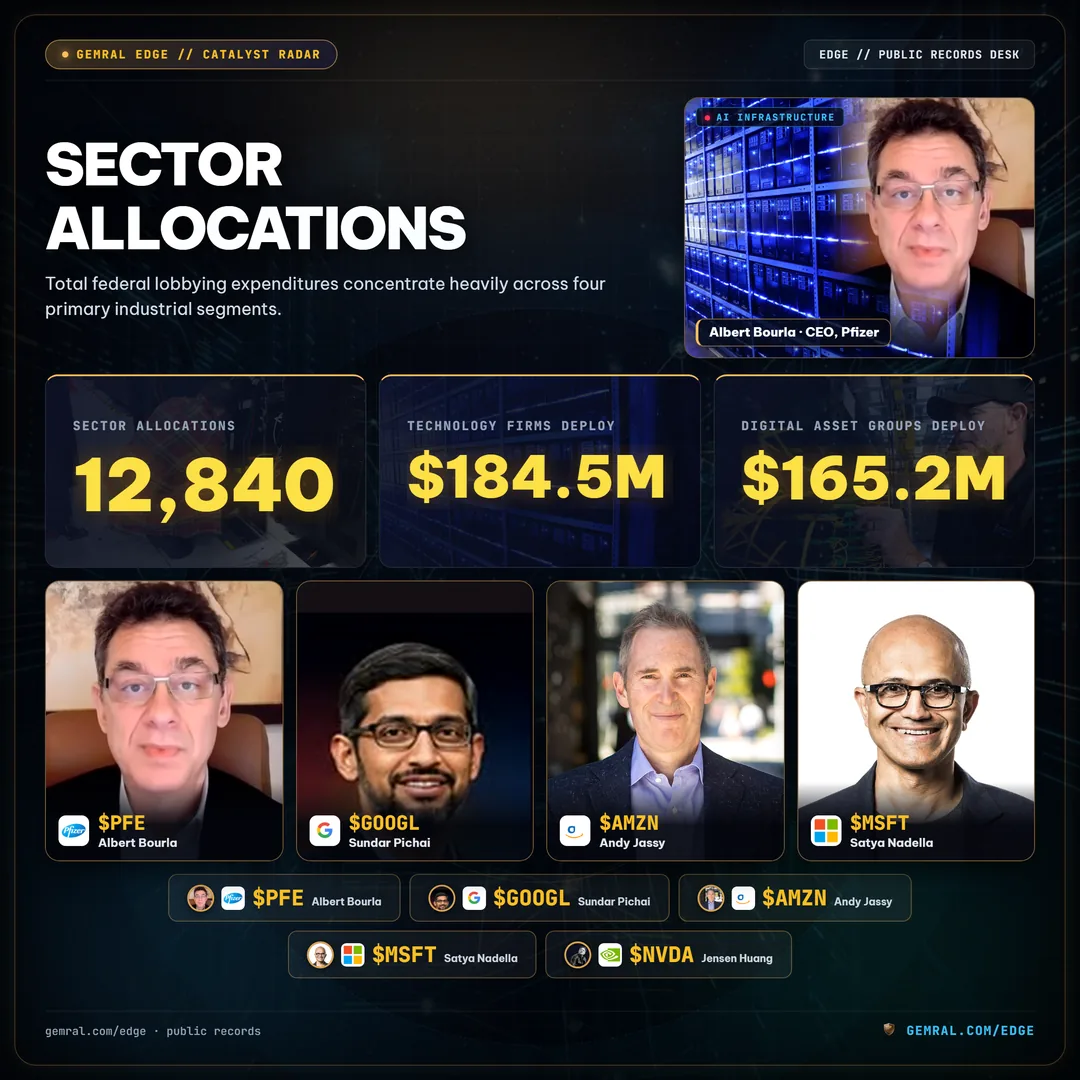
联邦游说总支出高度集中于四大主要工业领域。虽然有超过12,840家不同机构注册了游说代表,但前50大企业出资方占据了绝大部分总额。具体而言,制药与健康产品企业每年投入$382.4M,科技企业投入$184.5M,金融服务与数字资产集团投入$165.2M,国防承包商投入$142.8M专项政策游说资本。
制药与健康 ($382.4M)
以PhRMA、辉瑞 (Pfizer) 和安进 (Amgen) 等主要实体为代表。核心立法游说聚焦于药品福利管理机构 (PBM) 透明度要求、《通胀削减法案》下的联邦医疗保险药价谈判条款以及FDA加速审批改革。
科技与通信 ($184.5M)
由超大市值科技巨头领衔,包括Alphabet (GOOGL)、Meta (META)、亚马逊 (AMZN)、微软 (MSFT) 和英伟达 (NVDA)。游说目标涵盖联邦AI安全框架、云计算安全基线与半导体出口规则。
国防与航空航天 ($142.8M)
由主承包商主导,包括洛克希德·马丁 (LMT)、RTX Corporation (RTX) 和波音 (BA)。影响力活动直接对接《国防授权法案》(NDAA) 拨款、高超音速测试设施以及对外军售许可。
金融服务与金融科技 ($165.2M)
涵盖传统大型金融机构及数字资产游说联盟。核心焦点围绕巴塞尔协议III资本要求提案、消费者金融保护规则以及法定稳定币监管框架。
通过将这些支出映射到各机构的资产负债表上,游说追踪器将零散的披露转化为井井有条的企业战略重点雷达图。
将企业游说激增与联邦采购及立法催化剂相映射
当游说数据与联邦合同授予和行政机构指令交叉对照时,游说情报的真正量化价值才显现出来。企业游说不仅仅是防御性的,它直接决定了未来的现金流走势。
经验观察揭示了政策倡导集中度与采购落地速度之间的显著关联:
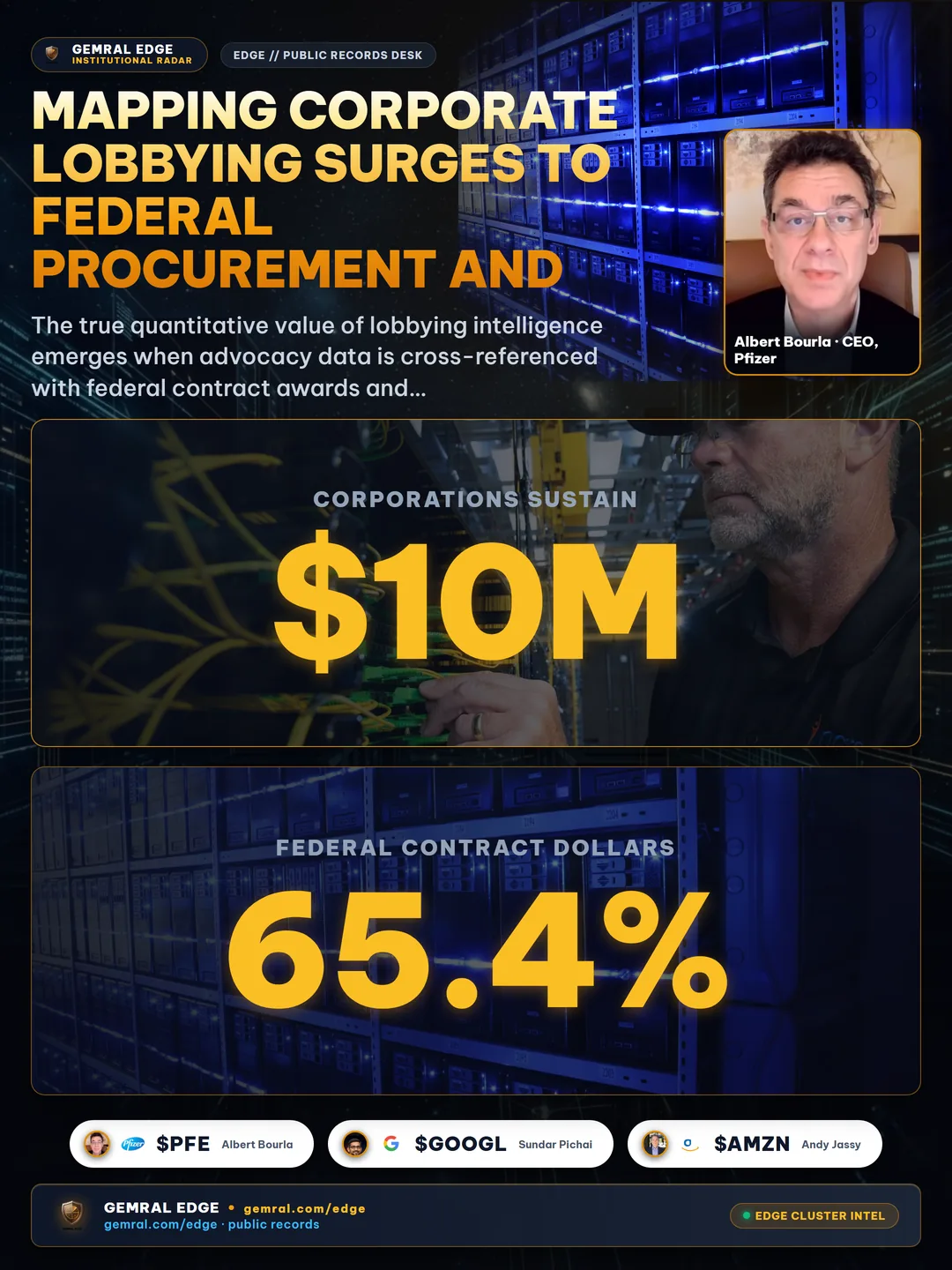
- 独家来源采购趋同 (Sole-Source):每年维持超过$1000万联邦游说支出的跨国企业,往往通过单一来源或有限竞争采购渠道获得其超过65.4%的联邦合同总额。积极游说确保了机构的需求建议书 (RFP) 技术规范与竞标企业的专有能力完全匹配。
- 委员会职能交汇:当企业游说人员重点针对特定委员会(如参议院商业、科学和运输委员会或众议院军事委员会)时,对应行政机构(如NASA、FAA或DoD)的合同授予通常在随后的季度中呈现加速履约态势。
- 早期立法信号提取:企业在某一具体法案编号上的游说支出异常激增,通常预示着即将达成立法共识。当法案从小程序审议进入国会记录时,市场定价往往早已开始提前计入结果。
通过在Edge Capitol intelligence上将游说数据与机构交易和政府支出数据进行交叉分析,分析师能够在公共政策从推测性讨论转变为获资助立法的早期阶段准确识别信号。
量化监控:市场情报如何追踪影响力资本
现代市场参与者不再依赖人工查阅PDF来理解企业游说动向。自动化算法流水线每日摄取LD-2修订案,计算滚动12个月 (TTM) 增速,并标记上市实体的异常支出激增。
在企业游说投资组合中计算的核心量化指标包括:
- 游说强度比率 (Lobbying Intensity Ratio):季度游说总支出除以过去四个季度滚动营收,突显部署超额资本以获取监管优势的中盘成长企业。
- 游说广度评分 (Lobbying Breadth Score):单季度内接洽的独立联邦机构与国会委员会数量,区分局部政策游说与全国性防务战略部署。
- 旋转门密度 (Revolving Door Density):追踪注册为现任主承包商活跃游说人员的前国会委员会工作人员和行政部门官员。
系统化追踪揭示了私营企业与联邦监管之间的深层结构联系。Gemral Edge游说监控的机构访问权益起始为个人量化交易员$39/月,机构情报团队$299/月,定制化企业级API访问权为$2,000/月。
Frequently asked questions
What is a corporate lobbying tracker and what disclosures does it monitor?
A corporate lobbying tracker is an automated surveillance tool that systematically analyzes public lobbying filings required by federal law. It monitors quarterly LD-2 filings that report total client expenditure, specific legislative issue codes (such as DEF for defense, TEC for technology, or TAX for taxation), targeted executive agencies, and specific bill numbers being lobbied. By mapping statutory filings to publicly traded corporate tickers, investors can observe legislative influence campaigns in real time.
How often are federal lobbying disclosures filed under the LDA?
Under the Honest Leadership and Open Government Act (HLOGA), corporations and lobbying firms must submit LD-2 disclosure reports quarterly within 20 days of the end of each calendar quarter. The statutory deadlines are April 20 (Q1), July 20 (Q2), October 20 (Q3), and January 20 (Q4). These strict deadlines ensure that corporate lobbying expenditures and active policy engagements are made public every ninety days.
Why is corporate lobbying spend an important leading signal for equity markets?
Corporate lobbying expenditures represent forward-looking strategic capital deployed to shape government policy, federal grant allocations, and procurement specifications. When corporations significantly accelerate lobbying spend on specific legislative bills, empirical analysis shows high correlation with subsequent federal contract awards and regulatory protections. Surges in quarterly lobbying spend often precede major government appropriations, antitrust interventions, or subsidy distributions.
What is the difference between direct lobbying and political contributions?
Direct lobbying involves compensated communication with covered legislative and executive branch officials to influence specific legislation or administrative rules, reported on quarterly LD-2 filings. Political campaign contributions are donations to candidates and political action committees (PACs), regulated separately under the Federal Election Campaign Act and reported semi-annually on LD-203 contribution reports.