How is Corporate Lobbying Legal in the United States: Rules and Filings
How is Corporate Lobbying Legal in the United States: Rules and Filings
Citizens and market observers often wonder how is corporate lobbying legal when commercial enterprises spend billions annually to influence federal legislation and regulatory policy. To track the flow of influence capital across federal agencies and congressional committees, researchers examine the corporate lobbying spending intelligence hub, auditing public disclosures under statutory transparency regimes.
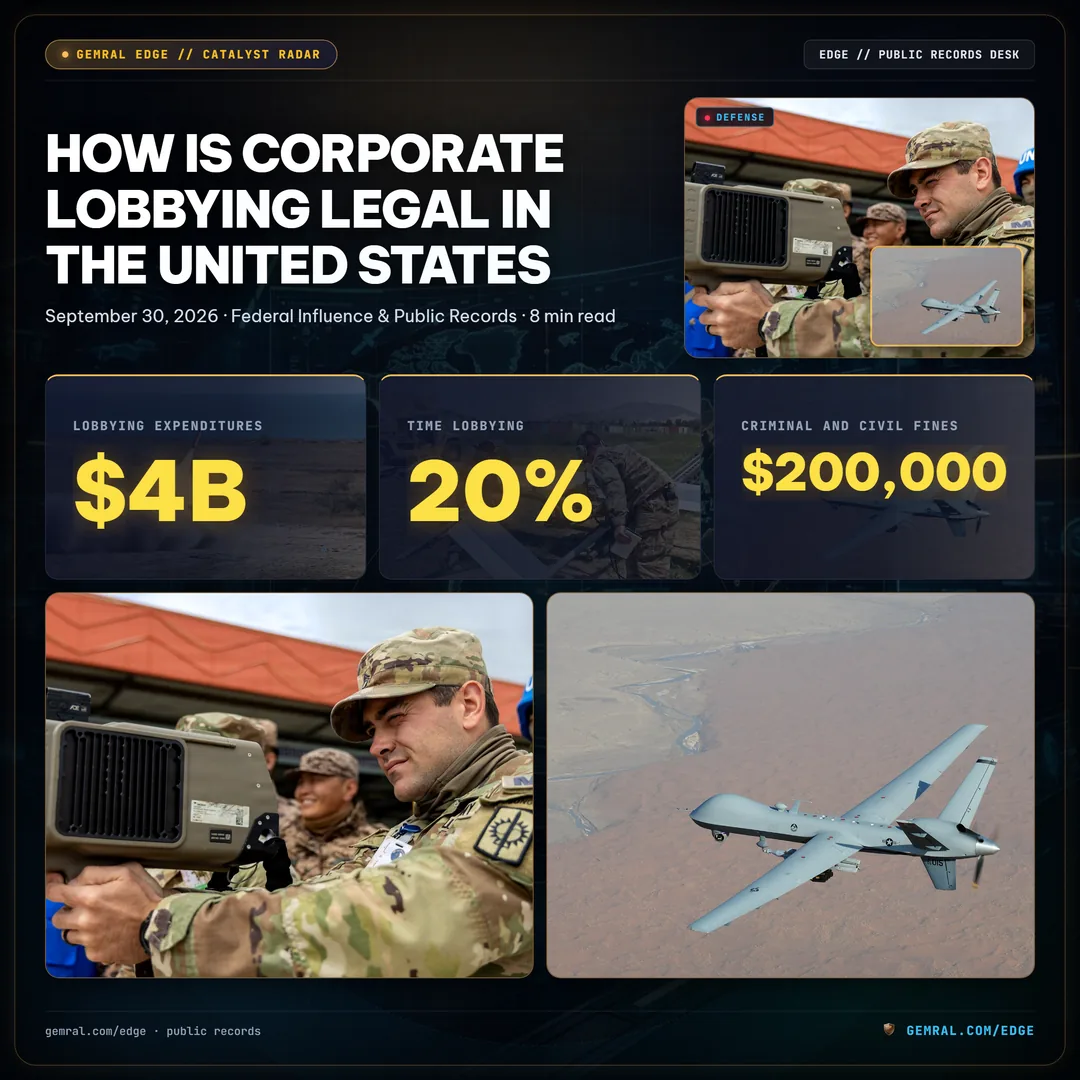
Every year, corporations, trade associations, and non-profit organizations deploy over $4 billion in registered lobbying expenditures across Washington. While public perception often equates lobbying with corrupt payments, the practice is grounded in fundamental constitutional protections and strictly regulated by federal statutes. Understanding the legal framework that permits corporate lobbying requires examining the First Amendment of the US Constitution, the Lobbying Disclosure Act of 1995, and the statutory boundaries that separate protected petitioning from unlawful corruption.
1. Constitutional Foundation: The Right to Petition
The foundational answer to how is corporate lobbying legal rests in the text of the First Amendment of the United States Constitution. Adopted in 1791 as part of the Bill of Rights, the First Amendment explicitly guarantees "the right of the people peaceably to assemble, and to petition the Government for a redress of grievances."

Supreme Court jurisprudence has consistently affirmed that the right to petition encompasses individuals, organized groups, and corporate entities. In landmark cases such as Eastern Railroad Presidents Conference v. Noerr Motor Freight, Inc. (1961) and United Mine Workers of America v. Pennington (1965)—establishing the Noerr-Pennington doctrine across 50 states—the Court held that concerted efforts to advocate for legislation or executive action are shielded from antitrust liability under the Petition Clause. Furthermore, the Court's ruling in Citizens United v. Federal Election Commission (2010) reinforced that political speech, including advocacy and associative communications, cannot be suppressed based on the corporate identity of the speaker across over 2,500 active commercial entities.
2. Statutory Governance: The Lobbying Disclosure Act (LDA)
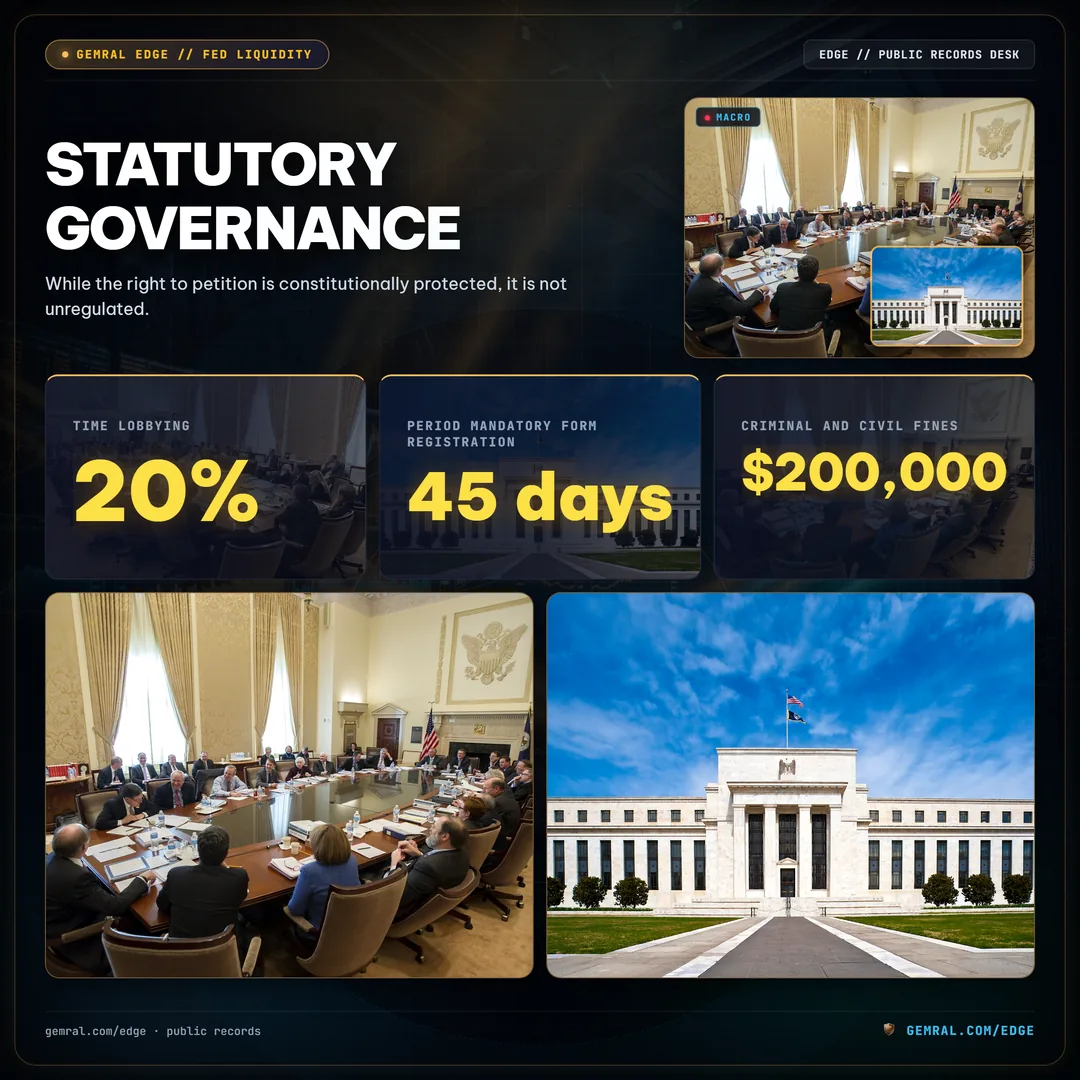
While the right to petition is constitutionally protected, it is not unregulated. Congress established rigorous transparency and disclosure mandates through the Lobbying Disclosure Act (LDA) of 1995, as amended by the Honest Leadership and Open Government Act (HLOGA) of 2007.
| Regulatory Requirement | Statutory Rule | Enforcement Mechanism |
|---|---|---|
| Lobbyist Registration | Spends ≥20% of time lobbying over 3-month period | Mandatory Form LD-1 registration within 45 days |
| Quarterly Financial Filings | Detailed reporting of lobbying expenses and income | Quarterly Form LD-2 submissions with specific issue codes |
| Gift and Travel Restrictions | Strict limits on gifts, meals, and paid travel to officials | Criminal and civil fines up to $200,000 under HLOGA |
| Post-Employment Revolving Door | Cooling-off periods (1-2 years) for former officials | Federal ethics bans under 18 U.S.C. 207 |
| Campaign Contribution Disclosures | Semi-annual reports of political contributions | Form LD-203 disclosure filed with Clerk of the House |
Under the LDA, a registered lobbyist is legally defined as an individual who is employed or retained by a client for compensation, makes more than one lobbying contact, and spends at least 20 percent of their professional time engaged in lobbying activities on behalf of that client during a three-month period. Organizations that employ in-house lobbyists or retain outside government affairs firms must report all related expenditures quarterly.
3. What Lobbyists Actually Do: Information vs Influence
In practice, corporate lobbying primarily functions as a mechanism of technical expertise and legislative policy drafting. Members of Congress and federal agency officials face thousands of highly complex regulatory issues—ranging from semiconductor export standards and artificial intelligence privacy rules to pharmaceutical clinical trial approvals—with limited personal staff resources.
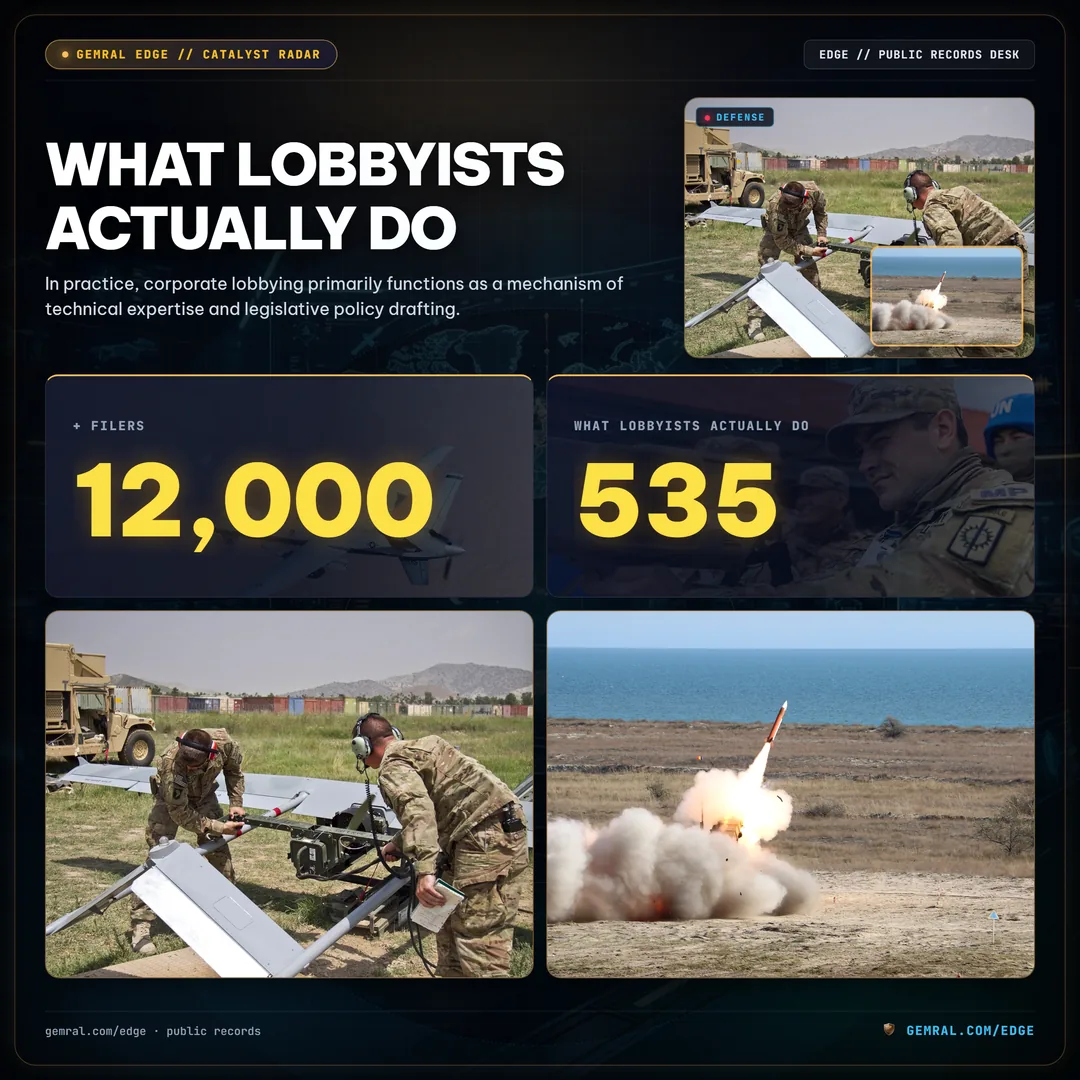
- Policy and Regulatory Analysis: Lobbyists provide lawmakers and agency staff with detailed economic impact models, engineering data, and technical evaluations of proposed statutory language. Over 12,000 registered lobbyists operate across 535 congressional offices.
- Legislative Drafting: Specialized legal counsel frequently draft statutory amendments, committee report language, and regulatory comments for submission during notice-and-comment rulemaking across 15 executive departments.
- Agency Monitoring: Lobbyists track the progress of federal grants, procurement awards, and rule changes across executive branch departments, alerting corporate clients to impending regulatory shifts.
- Coalition Building: Corporate government relations teams coordinate with trade associations, labor groups, and community stakeholders to build broad multi-sector consensus around legislative proposals.
Importantly, federal law strictly distinguishes between educational policy advocacy and campaign finance. Direct financial contributions to political campaigns cannot be tied to specific legislative acts; any quid-pro-quo agreement constitutes bribery, which is punishable under federal criminal statutes.
4. Analyzing Corporate Lobbying as an Investment Signal
For financial analysts and institutional investors, public lobbying disclosures represent a vital forward-looking data source. Because corporations must disclose the specific federal agencies contacted, the legislative bill numbers targeted, and the dollar amounts spent, LDA filings reveal where corporate capital is proactively defending economic moats.
When an enterprise in the aerospace, defense, or healthcare sector increases quarterly lobbying expenditures by 50% or more over a baseline of $2.5 million, public records frequently reveal an impending contract award or favorable legislative subsidy within a 90-day execution window. Tracking these filings allows researchers to anticipate policy-driven revenue shifts months before they materialize in quarterly corporate earnings.
Regulatory & Investment Disclaimer: Public data · not investment advice. All lobbying expenditure figures, statutory references, and disclosure requirements are compiled directly from official public records maintained by the U.S. House of Representatives, the U.S. Senate, and the Department of Justice under the Lobbying Disclosure Act (LDA). Past legislative spending does not ensure future corporate or regulatory outcomes.