Blackwell Ultra Liquid Cooling Server Shortage
Jensen Huang Blackwell Ultra Liquid Cooling Server Shortage: NVL72 CDUs & Thermal Equities
Quantitative engineering audit of Nvidia GB200 and Blackwell Ultra NVL72 liquid cooling bottlenecks, coolant distribution unit (CDU) lead times, blind-mate quick-disconnect shortages, and thermal supply chain stocks.
Blackwell Thermal Hydraulics & Shortage Simulator
Simulate rack thermal dissipation, cooling headroom delta, component lead-time backlogs, and supplier pricing power.
- Heat Dissipation Capacity:
- Thermal Headroom Delta:
- Bottleneck Severity Index:
- Projected Delivery Lead Time:
- Supplier Pricing Power Tier:
1. Thermodynamic Limits of NVL72: 132 Kilowatts per Rack
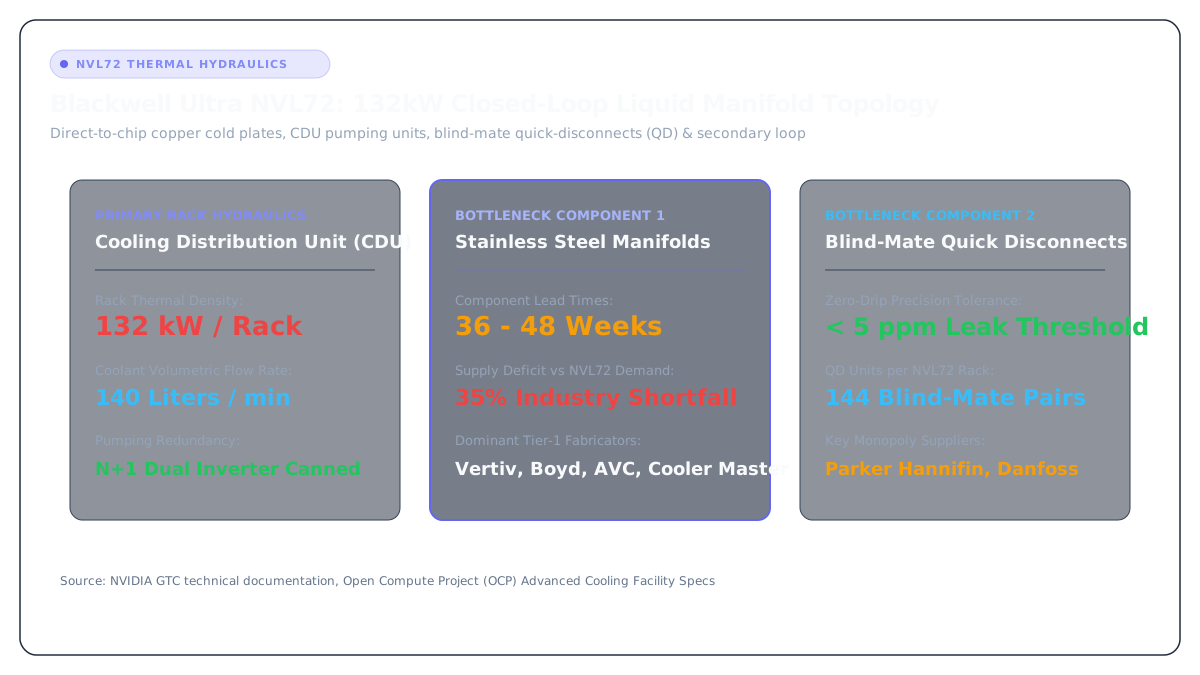
Nvidia flagship GB200 NVL72 architecture packs 72 Blackwell GPUs and 36 Grace CPUs into a single standardized data center cabinet, drawing an unprecedented 132 kilowatts of electrical power. Dissipating 132 kW of concentrated heat from a compact one-meter-wide footprint represents the most demanding thermal management challenge in computing history.
Air-cooling reaches physical thermodynamic limits around 35 to 40 kW per rack. Beyond this threshold, airflow velocity requirements induce severe acoustic turbulence, excessive fan parasitic draw, and thermal throttling that cripples GPU tensor core performance. Consequently, Blackwell Ultra mandates 100% direct-to-chip (D2C) liquid cooling for primary compute silicon.
The internal fluid loop circulates treated coolant through micro-skived copper cold plates attached with sub-millimeter thermal interface materials (TIM). Operating fluid flow rates must maintain 140 liters per minute across dozens of server trays while keeping fluid pressure drop strictly within acceptable pump curve tolerances.
Institutional hardware analysts monitor this thermal physics transition closely. The physical impossibility of air cooling transforms data center thermal infrastructure from a commodity facilities cost into the primary gating factor for Blackwell shipment timelines.
2. The CDU and Manifold Bottleneck: 36-to-48-Week Lead Times
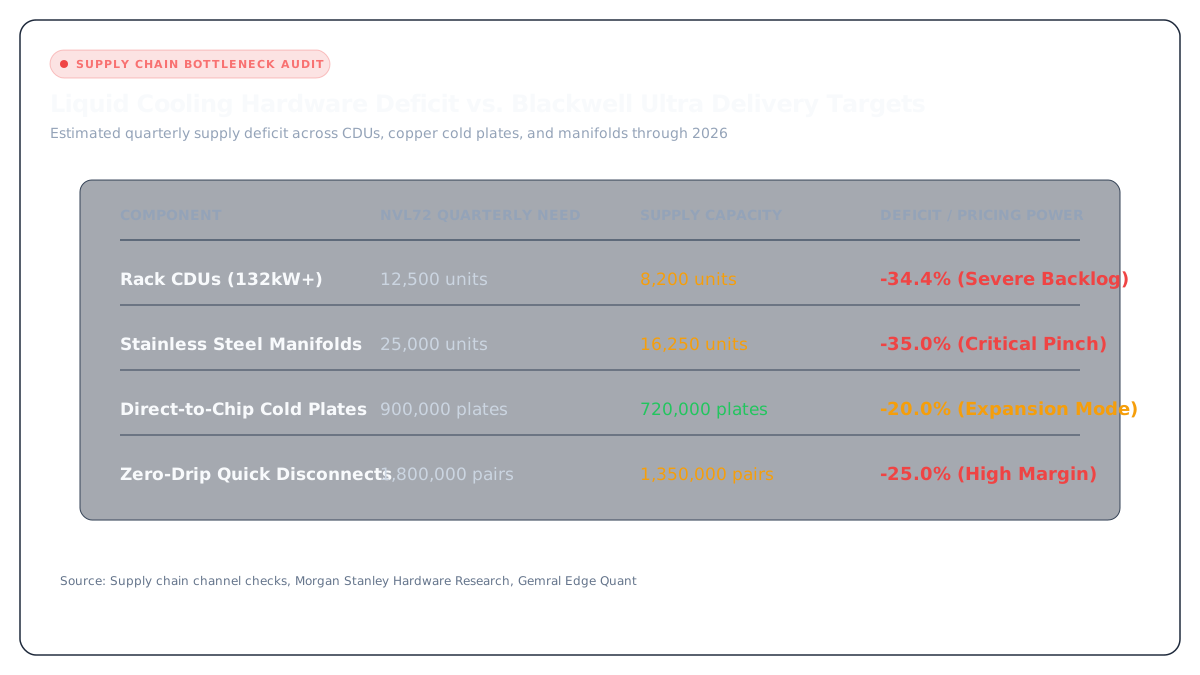
While Nvidia chip packaging capacity at TSMC (CoWoS-L) has substantially expanded, the primary shipment bottleneck has shifted downstream to precision mechanical cooling components. Coolant distribution units (CDUs) and stainless steel distribution manifolds are experiencing acute supply shortages with procurement lead times stretching up to 48 weeks.
A single NVL72 rack requires complex multi-port vertical manifolds engineered to deliver uniform hydraulic pressure to every computing tray. Any fabrication defect or dimensional tolerance flaw causes flow imbalances, starving top-tier GPUs of coolant and triggering emergency hardware shutoffs.
Manufacturing these manifolds requires aerospace-grade robotic orbital welding, ultrasonic cleanroom decontamination, and high-pressure helium leak testing. Only a handful of specialized global fabricators possess the automated production lines required to meet Nvidia rigorous tier-one qualification standards.
This acute manufacturing bottleneck means that even when silicon dies are fully packaged and tested, entire server racks cannot ship to hyperscalers without certified thermal plumbing hardware, creating substantial delivery delays across cloud data center rollouts.
3. Blind-Mate Quick Disconnects: Zero-Drip Engineering Tolerance
Connecting server trays into live liquid loops requires blind-mate quick disconnect (QD) couplings. Technicians sliding heavy compute sleds into rack slots cannot manually verify fluid seals; the connectors must self-align and lock with absolute zero-drip precision under operational hydraulic pressures.
Leakage thresholds are set at less than 5 parts per million. In an electrical enclosure conducting 132 kilowatts at 48V busbars, a single droplet of conductive fluid can cause catastrophic arc flashes, short circuits, and millions of dollars in destroyed enterprise hardware.
Precision engineering requirements for internal O-rings, fluoropolymer seals, and stainless steel check valves concentrate manufacturing capability among a tiny oligopoly of precision fluid dynamics specialists such as Parker Hannifin and Danfoss.
With 144 blind-mate QD couplings required per NVL72 rack, global demand is surging toward tens of millions of precision units annually, driving gross margins for qualified component vendors past 50%.
4. Delivery Schedules and Hyperscaler Deployment Delays
Jensen Huang public commentary and hyperscaler earnings disclosures confirm that Blackwell demand is extraordinarily high, yet thermal delivery bottlenecks have caused phased delivery deferrals from late 2024 into mid-2025 across Microsoft, Meta, Google, and Amazon AWS installations.
Hyperscale cloud providers cannot simply plug NVL72 racks into existing facilities. Legacy data centers must undergo extensive brownfield retrofits to install primary facility chilled water loops, external dry coolers, and heavy-duty structural floor reinforcement to support 3,000-pound liquid-filled cabinets.
These multi-quarter facility modification cycles mean that hyperscalers with established liquid infrastructure command a major competitive lead time advantage over secondary cloud providers scrambling to secure mechanical contractors.
Delays in cooling component fulfillment directly compress near-term revenue recognition for server assemblers while simultaneously solidifying pricing power for specialized thermal equipment manufacturers.
5. Investment Playbook: Thermal Management Public Equities
The structural transition to liquid cooling creates one of the most compelling long-term capital expenditure tailwinds in technology hardware. Institutional portfolios are aggressively rotating into liquid cooling pure-plays and thermal infrastructure providers.
Vertiv (VRT) dominates enterprise CDU manufacturing and datacenter thermal power management, maintaining direct co-development partnerships with Nvidia to supply reference cooling architectures for Blackwell.
Component leaders including Supermicro (SMCI), Boyd Corporation, AVC (Asia Vital Components), and Auras Technology provide cold plates and high-density liquid modules experiencing rapid revenue expansion.
Industrial fluid control giants like Parker Hannifin (PH) and nVent Electric (NVT) provide mission-critical quick disconnects, secondary piping, and modular liquid enclosures with deep competitive moats.
Access Real-Time Terminal Intelligence & Quantitative Signals
Unlock instant Telegram alerts, full congressional portfolio archives, and algorithmic catalyst radar.
Upgrade to Gemral Edge Pro ($39/mo)Frequently asked questions
Why does Nvidia Blackwell Ultra require liquid cooling?
The flagship NVL72 rack draws 132 kilowatts of electrical power, far exceeding the thermodynamic limit of air cooling (~35kW). Direct-to-chip liquid cooling is physically mandatory to prevent catastrophic GPU thermal throttling.
What cooling components are experiencing the worst shortages?
Coolant Distribution Units (CDUs), precision stainless steel manifolds, and blind-mate quick-disconnect (QD) couplings are facing lead times up to 36-48 weeks due to demanding precision manufacturing tolerances.
How do cooling bottlenecks affect Nvidia shipment delivery schedules?
Thermal plumbing shortages and rack-level brownfield retrofits have deferred large-scale volume shipments from late 2024 into mid-2025, delaying hyperscaler cluster commissioning dates.
Which stocks benefit most from the AI liquid cooling transition?
Key public equities include Vertiv (VRT) for CDUs, Parker Hannifin (PH) for quick disconnects, nVent (NVT) for manifolds, and Asian cold plate specialists like AVC and Auras Technology.
Risk Disclaimer
Trading and investing in digital assets, financial instruments, and predictive events involve substantial risk of loss and are not suitable for every investor. The predictive intelligence, probability distributions, historical precedents, and scenario modeling presented on this page are compiled for informational and research purposes only and do not constitute financial, investment, legal, or tax advice. Past performance and statistical precedents do not guarantee future outcomes. Always conduct independent due diligence before committing capital.