Stanley Druckenmiller Asymmetric Macro Theses Stocks
Stanley Druckenmiller Top Macro Bets Rate Cut Playbook: Hard Assets & Treasury Short Guide
Quantitative analysis of Stanley Druckenmiller Duquesne Family Office portfolio positioning, yield curve steepener execution, long copper and gold conviction, and short long-duration Treasury bets.
Druckenmiller Rate Cut & Hard Asset Allocation Simulator
Simulate rate cut easing cycles, debt-to-GDP fiscal dominance, structural commodity deficits, and portfolio posture.
- Hard Asset Conviction Score:
- Short Bond Asymmetry Ratio:
- Recommended Hard Asset Weight:
- Macro Monetary Regime:
- Superinvestor Portfolio Stance:
1. The Druckenmiller Philosophy: Asymmetry and Central Bank Liquidity
Stanley Druckenmiller unmatched 30-year track record compounding capital at over 30% annually without a single down year at Duquesne Capital was built on a foundational tenet: earnings do not move the overall market; central bank liquidity does. When the Federal Reserve embarks on an interest rate cutting cycle into elevated asset valuations and high fiscal debt, traditional textbook models fail completely.
In a classic monetary easing cycle, lower rates stimulate economic activity and compress risk premiums. However, when rate cuts coincide with persistent structural inflation drivers and a $36 trillion national debt, easing risks reigniting commodity price inflation and steepening the back end of the yield curve.
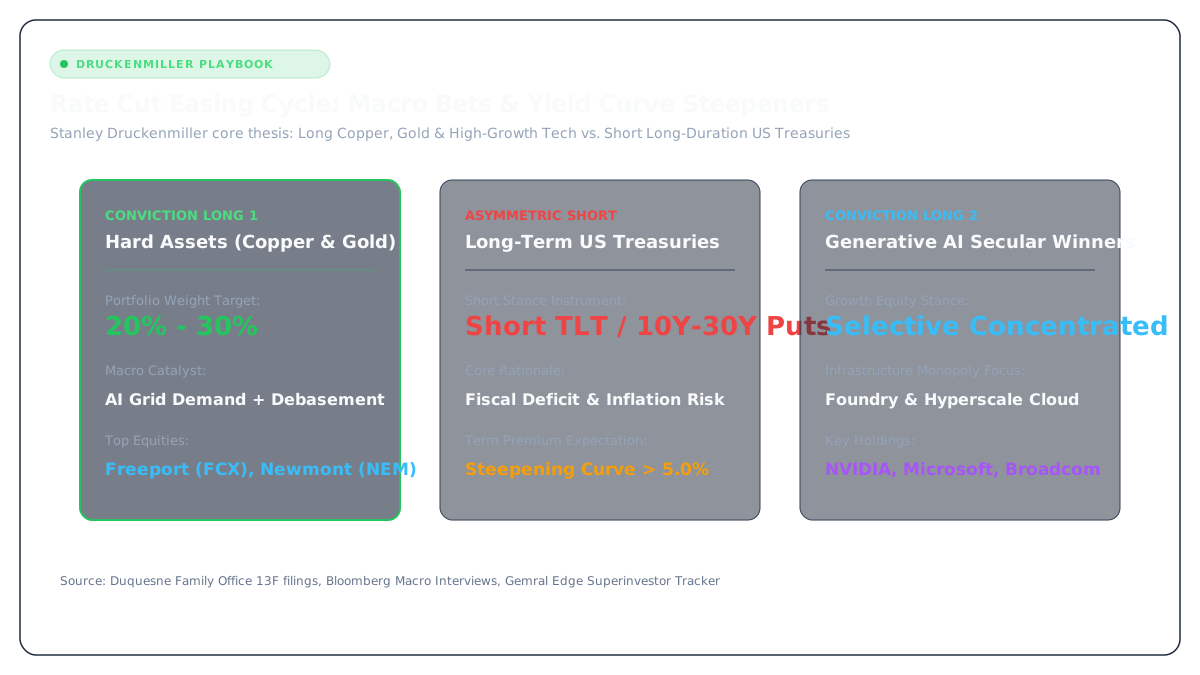
Druckenmiller macro framework focuses on finding extreme asymmetric risk-reward profiles where macro consensus is looking in the wrong direction. While retail market participants default to buying long-duration sovereign bonds during rate cuts, Druckenmiller has aggressively established short positions on US Treasuries.
Quantitative analysis of Duquesne portfolio filings reveals a highly concentrated, disciplined strategy designed to capture physical asset appreciation and AI productivity gains while insulating capital from fiscal debasement.
2. The Short US Treasury Trade: Why Long-Term Yields Will Rise
The core thesis behind Druckenmiller short position on long-duration US Treasuries rests on fiscal dominance. With the United States running peacetime federal deficits exceeding 6% of GDP, the Treasury Department must issue trillions of dollars in new debt each quarter to fund rollover obligations and entitlement spending.
When the Federal Reserve cuts policy rates at the short end of the curve while the government floods primary dealers with long-dated bond issuance, the result is not lower long-term borrowing costs, but a dramatic 'bear steepener' in the 10-year and 30-year yield curve.
Foreign central banks and sovereign wealth funds have systematically reduced their purchases of US Treasury debt, shifting marginal absorption onto price-sensitive domestic private investors who demand higher term premiums to absorb duration risk.
Shorting long bonds via put options on liquid instruments like the iShares 20+ Year Treasury Bond ETF (TLT) or direct futures contracts provides an asymmetric payoff: if inflation resurges, yields spike upward; if economic growth slows, fiscal deficits expand further, keeping supply pressure relentless.
3. The Physical Copper and Gold Supercycle Thesis
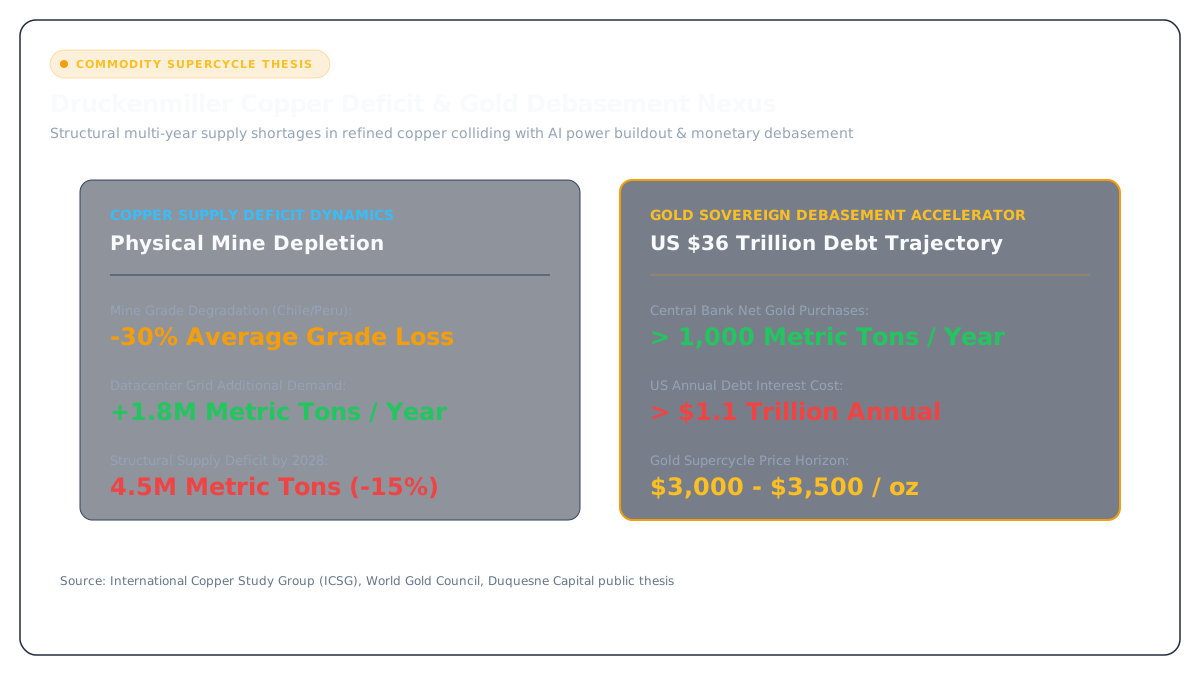
Druckenmiller has repeatedly highlighted copper as one of the most compelling supply-demand imbalances in global commodity history. Physical mine supply growth has ground to a halt due to declining ore grades in South America, prolonged permitting timelines exceeding 15 years, and severe water scarcity.
Simultaneously, unyielding structural demand drivers are accelerating: the multi-gigawatt power buildout for artificial intelligence data centers, electric grid modernization, and global defense electrification all require immense quantities of refined cathode copper that cannot be substituted.
In parallel, gold functions as the ultimate monetary hedge against sovereign debt debasement. Global central banks have accumulated physical bullion at an annualized run-rate surpassing 1,000 metric tons, diversifying reserves away from weaponizable Western fiat paper.
Allocating significant capital to low-cost copper producers like Freeport-McMoRan (FCX) and sovereign-grade gold royalty streams provides direct participation in commodity supercycles without taking high-risk exploration operational hazards.
4. Concentrated AI Winners vs. Broad Market Equities
Despite holding a cautious macro outlook regarding broader equity valuations, Druckenmiller maintains substantial long exposure to secular artificial intelligence infrastructure winners. His philosophy emphasizes that during major technological paradigm shifts, top-tier monopolistic platforms can generate earnings growth that easily outpaces macro headwinds.
Duquesne early conviction in Nvidia, Microsoft, and Broadcom demonstrates the principle of concentration: when extraordinary fundamental momentum aligns with secular capital expenditure tailwinds, sizing positions aggressively generates generational returns.
However, Druckenmiller actively trims positions as valuations become euphoric, rotating capital into second-derivative beneficiaries such as energy infrastructure, electrical equipment manufacturers, and datacenter real estate.
This selective barbell structure—holding secular high-conviction growth equities on one side and defensive hard asset inflation hedges on the other—defines the modern Druckenmiller macro playbook.
5. Constructing a Druckenmiller-Inspired Institutional Portfolio
Implementing a Druckenmiller-inspired strategy in the current rate cut regime requires strict position sizing, disciplined stop-loss execution, and dynamic asset rebalancing across four core pillars.
Pillar one allocates 25% to 35% of capital toward physical commodities and mining equities, emphasizing Freeport-McMoRan (FCX), Southern Copper (SCCO), and Newmont (NEM) to capture structural supply shortfalls.
Pillar two allocates 30% to 40% toward concentrated AI secular compounders with deep pricing power, avoiding low-margin consumer tech that remains vulnerable to stagflationary margin compression.
Pillar three implements tactical duration shorts on sovereign debt via TLT puts or short bond futures, while pillar four maintains a 15% to 20% cash and short-term T-bill reserve to capitalize aggressively on liquidity dislocations.
Access Real-Time Terminal Intelligence & Quantitative Signals
Unlock instant Telegram alerts, full congressional portfolio archives, and algorithmic catalyst radar.
Upgrade to Gemral Edge Pro ($39/mo)Frequently asked questions
Why is Stanley Druckenmiller shorting US government bonds during rate cuts?
Druckenmiller argues that massive peacetime US fiscal deficits ($2T/year) and persistent inflation risks will cause a bear steepener, forcing long-term 10-year and 30-year yields higher even as the Fed cuts short-term policy rates.
What is Druckenmiller investment thesis on physical copper?
Copper suffers from chronic physical mine depletion and 15-year development timelines, colliding with massive demand from AI data center power grids, defense, and electric vehicles, creating a structural multi-year supply deficit.
How does Druckenmiller balance AI tech stocks with macro inflation hedges?
He utilizes a barbell strategy: holding concentrated, high-margin AI infrastructure monopolists with pricing power, balanced against heavy allocations to physical gold, copper, and short long-duration debt hedges.
Which public equities reflect the Druckenmiller rate cut playbook?
Key holdings and proxy equities include Freeport-McMoRan (FCX) for copper, Newmont (NEM) for gold, Nvidia (NVDA) and Broadcom (AVGO) for AI, alongside put options on the TLT ETF for duration hedging.
Risk Disclaimer
Trading and investing in digital assets, financial instruments, and predictive events involve substantial risk of loss and are not suitable for every investor. The predictive intelligence, probability distributions, historical precedents, and scenario modeling presented on this page are compiled for informational and research purposes only and do not constitute financial, investment, legal, or tax advice. Past performance and statistical precedents do not guarantee future outcomes. Always conduct independent due diligence before committing capital.